2022 Domaine des Sonnettes Pied de Mouton

One of those natural wines from a small scale French producer that tells you nothing on the label apart from a good taste in graphics. Looking carefully, you can find the words Vin de France. The AOC system isn’t often less than cryptic but there’s a clue sometimes. It does make you wonder how these puzzling labels would have sold before google. Consultation with the oracle revealed this is from the Bugey valley in lovely Savoie and is 85% whole bunch Gamay and 15% destemmed Poulsard. It opened bright and crisp. A healthy lean BMI. Those yeasty smells of a low sulphur natty wine formed a haze over some invitingly fresh and bright red fruits. A bit of reduction too that dissipated after twenty four hours. Good the first day, the pristine fruit soared the second. Amazing perfume and nose filling fragrance emerged with all the red summer fruits backed by some powdered rock. Mountain fresh mouth watering acidity and a cat’s lick of fine skin tannin made it wholesome. Such good grapes and maybe an argument for a tolerance of nattiness in the cause of such scorching fruit expression. It’s such a tightrope. No real wobbling with this one. Long live diversity.

12.5% alcohol. Cork. $? Part of the Wendouree swap and very different to those Clare marvels.

95 points second day, natty stylee.

2022 Herència Altés Garnatxa Negra Terra Alta DO

Vinomofo, for good or bad. I must admit having a trawl now and then since I realised they direct imported the excellent Julien Schaal Rieslings. For most of us price is more than important, the business model less so. When this turned up for about $20 a bottle, my love of Grenache couldn’t resist. All the things that make a near to Priorat version so appealing. Deep but finely tailored cherry and other red fruits, nuts and a rocky cut. Fragrant with dry Mediterranean herbs too. Medium weight, fine skin tannins and refreshing acid bite. The only caveat being a twist of bitter sulphide, sadly so common in Spanish Grenache as it gains a year or so in the bottle. It did subside having been open for a day but..I must admit I always seem to like most Grenache when it’s youthful and booming with just picked succulence anyway. Some of S C Pannell’s McLaren Vale versions have persuaded me otherwise though. With the Rhone it’s more difficult as there’s blending and I can’t afford Rayas these days. The cause of the sulphide bitterness seems to be lack of YAN or yeast available nitrogen according to friendly winemakers. There’s also a much deeper scientific dive into types of sulphur compounds that affect wine and is well beyond my basic chemistry. I still can’t help wondering what makes wine tick though, so excuse me. In short this is probably one to drink at a nice cool temperature, like most young red wine demands, and soon. Nice lightweight bottle too.

14.5% alcohol. Diam. $20.

92 points notwithstanding a marginal fault that probably only bugs my precious taste anyway.

2022 Bien de Altura Vinos Sansofi Gran Canaria DO

Despite a love for things Spanish and there being a bit of fuss about Canary Islands’ wine, I’m pretty sure this is my first island bottle. Sort of another in a theme, as the last long look at a region was Etna and this comes from an island volcano too, albeit a bit less active. Reading about the islands, it seems the indigenous vine Listán Negro doesn’t crop up anywhere else now, it may have originated in Castilla or not depending on the source. There’s some considerable history as the Canaries have avoided phylloxera and vines are planted on original roots. Shakespeare’s Sir Toby Belch suggests someone is in need of a cup of canary in Twelfth Night. I’m a bit late catching up. A Jancis article says these vines are amongst the highest altitude in Europe although the latitude puts the islands closer to Africa. All intriguing really and so to the cup of canary itself. Initially a bit pongy with sulphidic edges and a bit of a natty waft. Just medium to light in extract. Settling down into reductive cherry, woody stem spice, leather and a very ashy, crushed rock landslide. Same in the mouth, the red fruits a bit compacted by stem, reduction and really dry stonewall tannin. Not sure it’s all pleasure. There’s some argument amongst wine lovers suggesting great wine is better without complicated cooking or any food at all. In this case, this ungainly cup took off with a bowl of sweetly tomato laden pasta sauced with pesto Trapanese. Happily a food enhancing structure and a mouthwatering savour took over and cleared the way for some fragrant red fruits and dusty savour. All the doubtful bits dropped away. After a bit of uncertainty about winemaking and enjoyment, three quarters of the bottle disappeared in the time it takes two people to eat dinner. There’s always a new wine adventure without leaving the table.

12.5% alcohol. Diam I think? $? no idea as it was part of a swap for some of the yearly Wendouree delivery. I always seem to do so well and end up with delicious things I wouldn’t normally go for.

94 or 95 points with food, hard to say without. It’s me not you, dear wine.

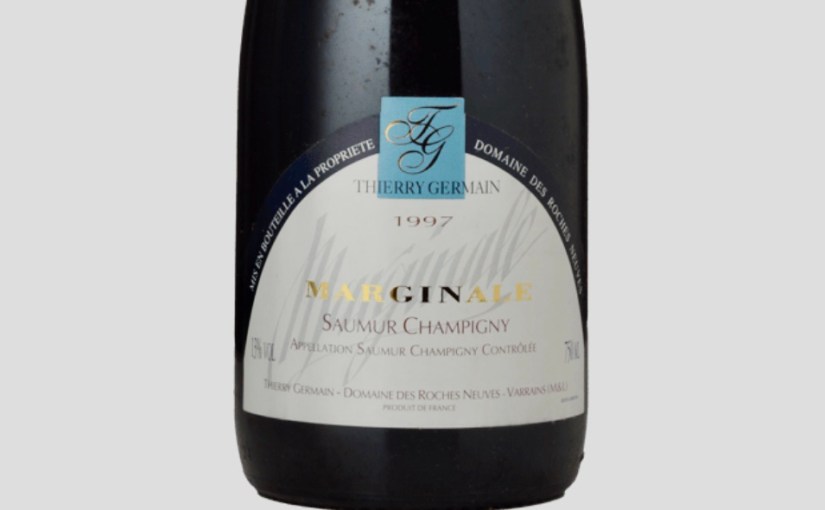
1997 Domaine des Roches Neuves Marginale Saumur Champigny

Somehow forgot to take a photo before the bottle hit the recycling bin and had to make do with a dodgy internet version that makes the GIN stand out. Odd. Must admit to liking this producer for some time but I’ve never ventured beyond the two or so basic Cabernet Francs in the range. They’ve always been delicious and very clean, perhaps unusually so for a lot of red wine making in the Loire? This bottle was another that appeared at auction and attracted no other bids apart from my less than extravagant $32. The current release is well over $AU100. Nonetheless quite a risk for something so old for someone so old and careful with the budget. Twice the corks gods have smiled in succession. Just about in one piece, good level and no leaks again. It seems the fruit comes from the domaine’s oldest vines on limestone including part from the famous Poyeux vines. The quality shone brightly in a still dark red colour, fresh aromas of squishy over ripe raspberries, dark cherry and an almost Bordeaux gravelly mineral thing. Noticeable char of oak gently sinking into the fruit. All very melded and of a whole with age but not tiring, more plateauing. Lots of darker complications as it opens, pleasure and deeper thoughts. This and the ancient Mitchell Shiraz from the last post will only provoke more bids for old things.

13% alcohol. Cork. $38 at auction, absolute bargain.

94 points.

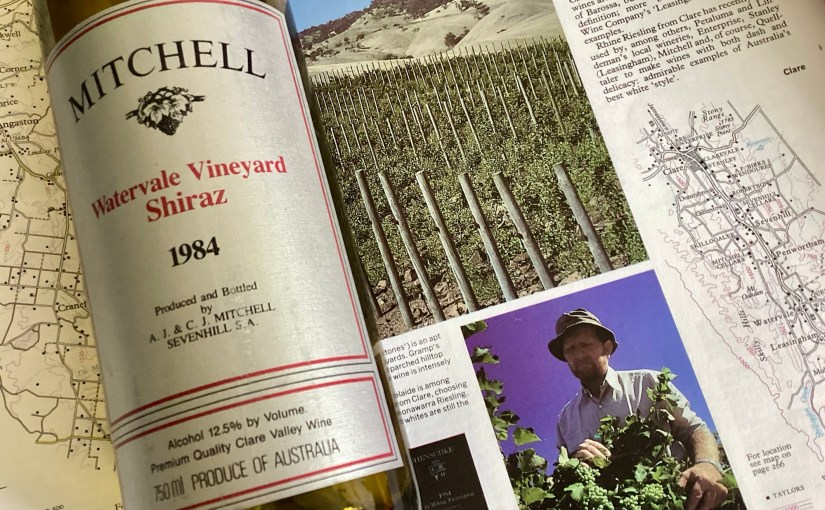
1984 Mitchell Watervale Vineyard Shiraz

A long established winery making well priced bottles without quite the fuss they deserve. Organic, dry grown and handpicked fruit should make them fashionable but somehow not the case. This appeared at auction and looked good in terms of fill level and label in tact. So old, the label predates the Peppetree Vineyard name that seemed so evocative in the late eighties. There’s always a bit of happy trepidation opening an oldie, just how crumbly is the cork? I struck an unusually in tact version that squeezed out in one piece and no leaks. There was still a lot of life in the drink, nice faded red colour, lovely old claret style red fruit hanging on, Clare red cherry, white pepper seasoning and still some rum and raisin oak, just a whiff of America. The acidity and tannins crisp and well integrated. What a lucky one. Fun lottery.

12.5% alcohol. Cork. $18 at auction.

92 points.

2023 Weingut Leitz Magic Mountain Rüdesheimer Riesling Trocken

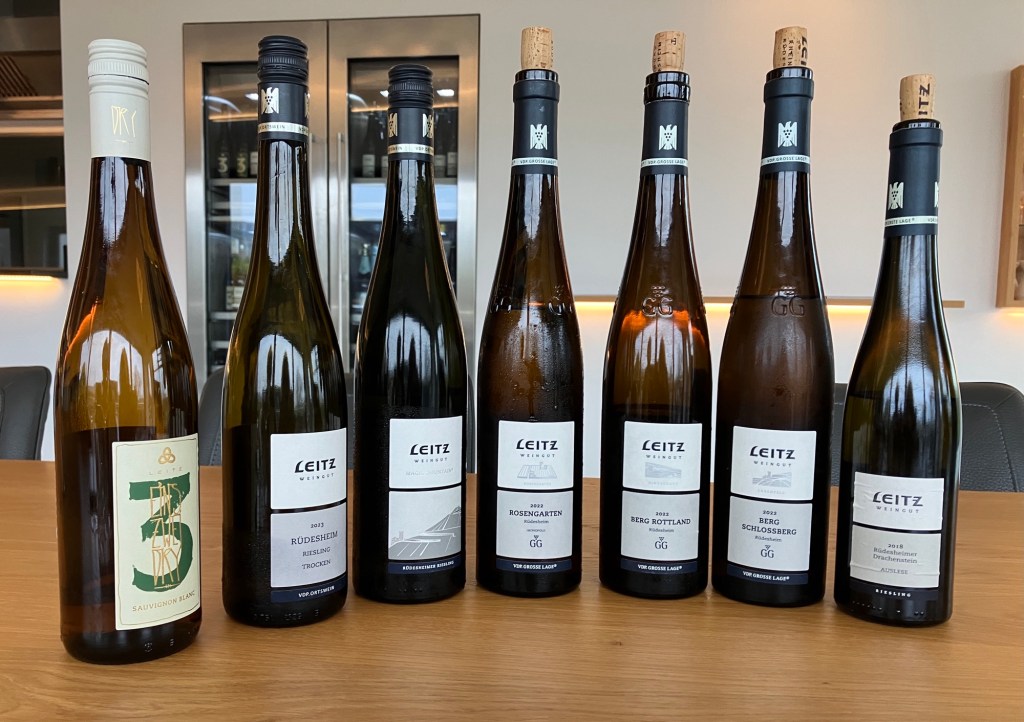
I must admit to loving Riesling but have a sad lack of experience with the best of Germany. The basic ones around $30 available in Australia are lovely on a hot summer evening but don’t seem to compete in terms of depth with locals at the price point. Spending more and it always seems to be other grapes. And I’m not a big fan of sugar, albeit, yes, the best 8% or 9% Germans do have a scintillatingly delicious balance where you hardly notice any sweetness. Planning to go through the enormous Frankfurt airport on this year’s Europe trip, the overused Googlemap app showed Rüdesheim was a hour away down the river. I picked three producers easy to reach by train and sent begging emails. Fancy being bothered by an old wine nut for a while? The nicest reply was from Leitz, please come and taste. Well, that’s lovely, yes please. Getting off the local S Bahn, a misty autumnal stroll from the pretty village of Geisenheim to Leitz was under a slope of vines just thinking of a winter doze. A warm welcome and a generous tasting took us on a trip across that slope overlooking the Rhine with peaks in the GGs. The bottles opened started with their cutely named Eins Zwei Dry and climbed up the heights of three GGs. The Schlossberg was really loooong.

For some nutty reason, Leitz seal their GGs with corks. Yes, the best expensive sort but…which is why this particular screw capped bottle seemed a good buy to take back to the hotel room that lacked a corkscrew. At a quality level just below GG, that unofficial measure of dry Riesling quality, the Magic Mountain stood out in the lineup, much closer to the GGs than the standard Rüdesheimer. Tasting at length over a couple of nights, it’s got that extra detail, depth and nuance that Riesling can do so well. Fresh ripe white peach, a touch of mango and citrus and that waxy flowery honey thing that distinguishes the best of Rieslings for me. The finest float of mouthwatering acidity to refresh, delicious. Elegant you could say. Lingers long. It’s named Magic Mountain in English as Thomas Mann had already written something in German by the same title.

12.5% alcohol and trocken. Screw Cap. €18.50.

94 points.

2022 Baglio di Pianetto fermata 125 Etna Bianco

One last Etna Bianco bought in Sicily and not exactly chosen by any great knowledge about the producer but because the label has a picture of a favourite train. At first glance it seems the maker was founded by a wealthy and noble entrepreneur from Vicenza who put his money where his palate told him, a winery just south of Palermo. Their production seems to focus on the usual Sicilian varieties from around the hills south of that chaotic city. I was a bit surprised to read on the back label that this bottle was in fact made for them by Cantine Valenti who were also responsible for the Deco supermarket bottle just posted, at about half the price. Just like the Enkelados bottling, this has the same deeper colour and extraction without adding weight. The same build of flavour and cut of Etna acidity but certainly a notch or two up in the fruit quality. Poised yellow fruits and flowers with a bit of hazel nut and white chocolate. Open over three days, there was again a weird echo of white Burgundy, with a very different texture of course, that fine pumice like acidity that’s got me hooked. A rich version but still balanced and no wobbles. Wasn’t expecting Etna Bianco to be my favourite Sicilian drink but it is now. Fresh pomegranate juice is pretty good morning option though. Enough antioxidants to clean up all that indulgence.

13% alcohol. Diam. €18.

94 points.