A bottle of Sainsbury’s Rioja in late seventies England sparked an enthusiasm which turned into an obsession. Moving to Australia only made it worse. At least I know I’m not alone.
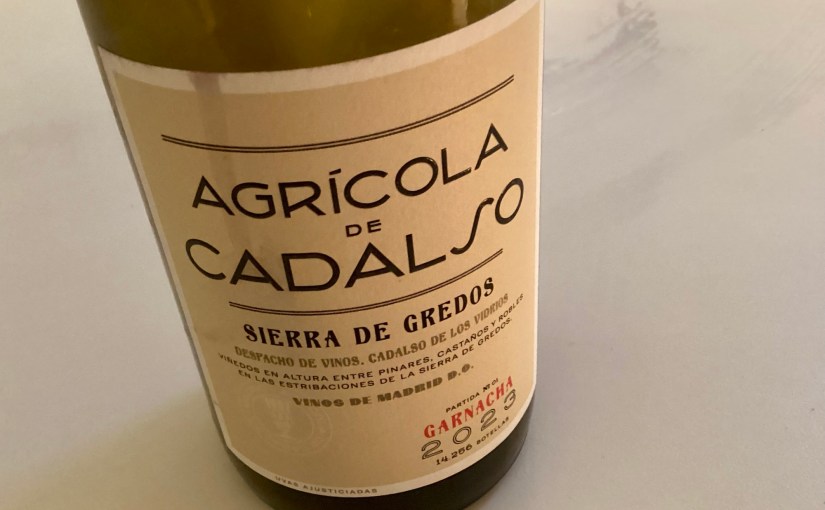
Being a bit of an architecture nerd as well as the wine sort, I do tend to notice the way older buildings made from the local stone seem to affect the mood of a city. Melbourne and its dark bluestone can make grey winter days a little sombre. Paris and its limestone, well. Madrid is a city of light grey granite and its best red wine comes from the same rocks in the surrounding mountains. Whether it’s the stark ground or the brisk altitude, or probably both, that produce such lightly mouthwatering wine, it’s certainly a very different expression compared to Aragon or Maclaren Vale. It’s an area only rediscovered in the last couple of decades and being so close to the capital seems to have attracted those interested in the natural with minimal intervention, for better or worse. I must admit to finding some versions just a bit too feral or variable from bottle to bottle. Comando G bottles have been particularly unpredictable, sometimes not in a good way. Finding this bottle in what at first glance was an uninspiring Madrid wine shop for €10, it looked worth a punt. On closer browsing, there were some good bottles amongst the utilitarian shelves and well priced beers. When I got back to our Madrid cupboard sized apartment, a closer look at the back label indicated a Comando G link, oh well. Indeed it did open with a little bit of that yeasty, slightly cidery, low sulphur, natty wine fug. A bit of reduction too. Happily oxygen worked its spell and a very bright red fruited wine emerged. Full of mouthwatering cherries, cooked strawberries, a touch of fennel, orange peel and a haze of sun warmed rocks. Great cut of fine acidity and tannin. The sort of perfume and refreshment that good Bourgogne rouge used to have before changes in its climate, both weather and financial. Still a bit close to the technical edge like some of those delicious old school Burgundies but we hit the bottom of the bottle pretty quickly.
14% alcohol. Diam I think? €10 which looks good considering the lottery of entry level Comando G is now over $70 in Australia now.
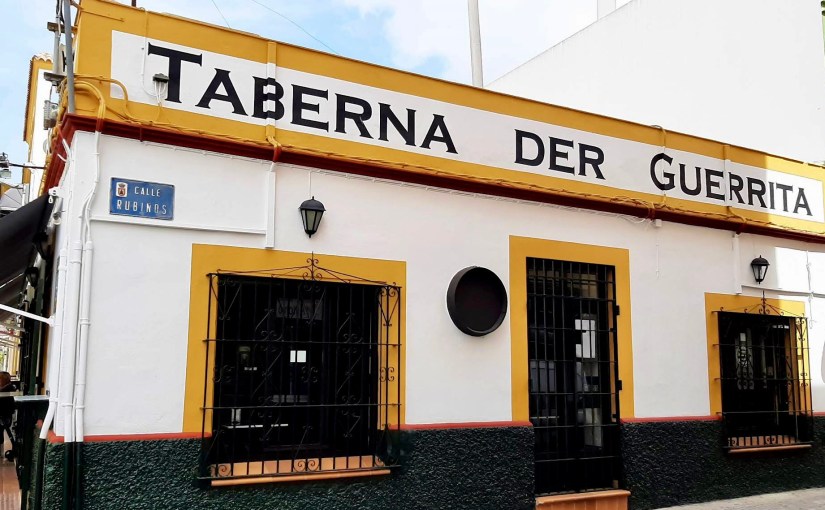
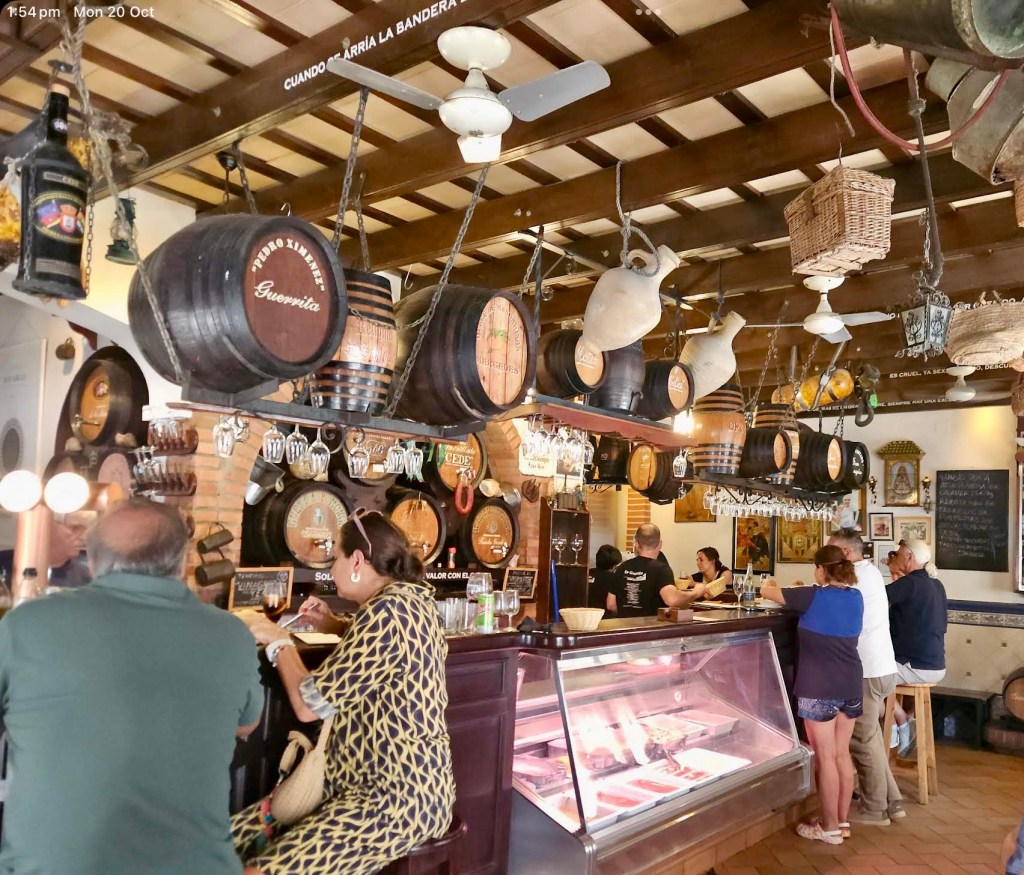
Suppose you could say it’s a pilgrimage for the lover of El Triangulo, the perfect geometry of Jerez de la Frontera, El Puerto de Santa María and Sanlúcar de Barremeda. Thanks again to the undertheflor blog which has been a great reference in finding the good stuff. Just wish it was more up to date. And speaking of time passing, it’s obvious that things don’t change too much as the clock ticks in the Taberna der Guerrita. The same groups of old mates still prop the bar with a copa or caña of cold beer, families come in up to three generations to drink and eat a little, the kids sitting amongst the feet on the bar step.
But there’s an incredible choice of Sherry drinks. The son of the business, Armando Guerra, has a job with the progressive Barbadillo dealing with their special bottlings and new projects. He’s a passionate advocate for the new focus on quality around the old triangle but in no way has forgotten what makes this bar tick. There’s a house Manzanilla en rama straight from the barrel for €1.50 and to eat there’s great local ingredients, seasonal and well cooked, no cheffy flourishes. Should you have some carefully saved cash to splurge on a special bottle, there’s a huge list right up to a Selosse fizz, well, it’s all about the yeast, no? To keep it interesting, there’s an ever changing biological de El Marco by the glass too. Happily, the place is a good fifteen minute walk from downtown Sanlúcar. Too far for the idle tourist but not the Sherry freak or the locals who know a great pub.
There’s always kind service with a smile or a crack if your Español is up to it.
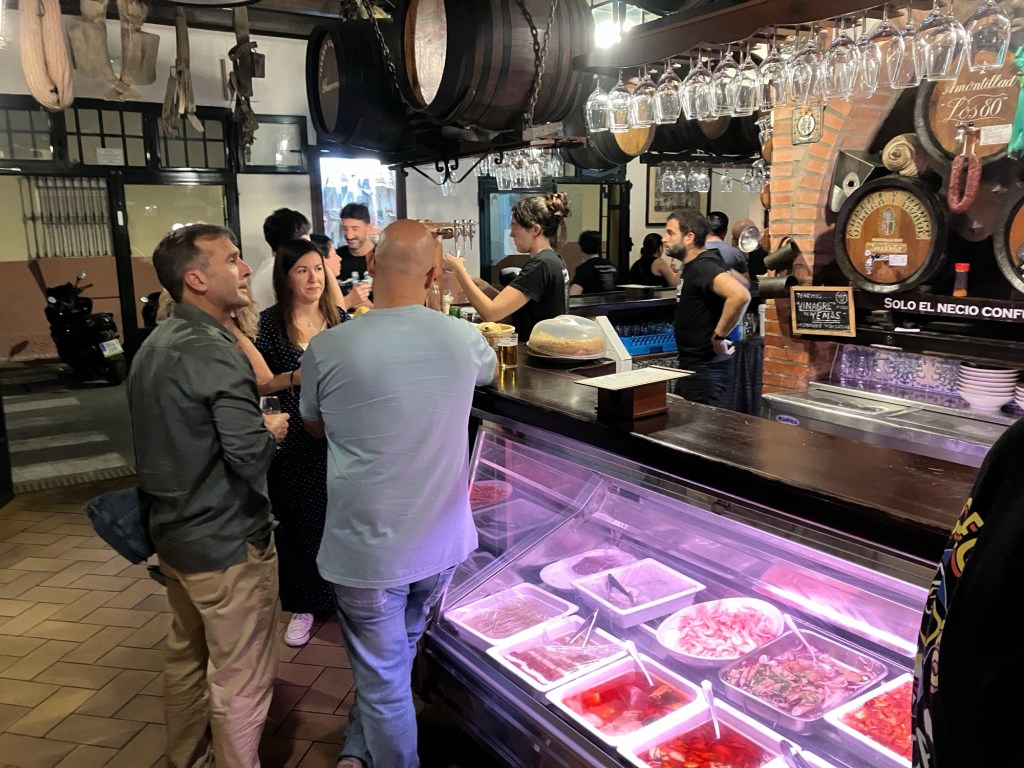
Good things to eat, ready to plate and a short list of calientes.
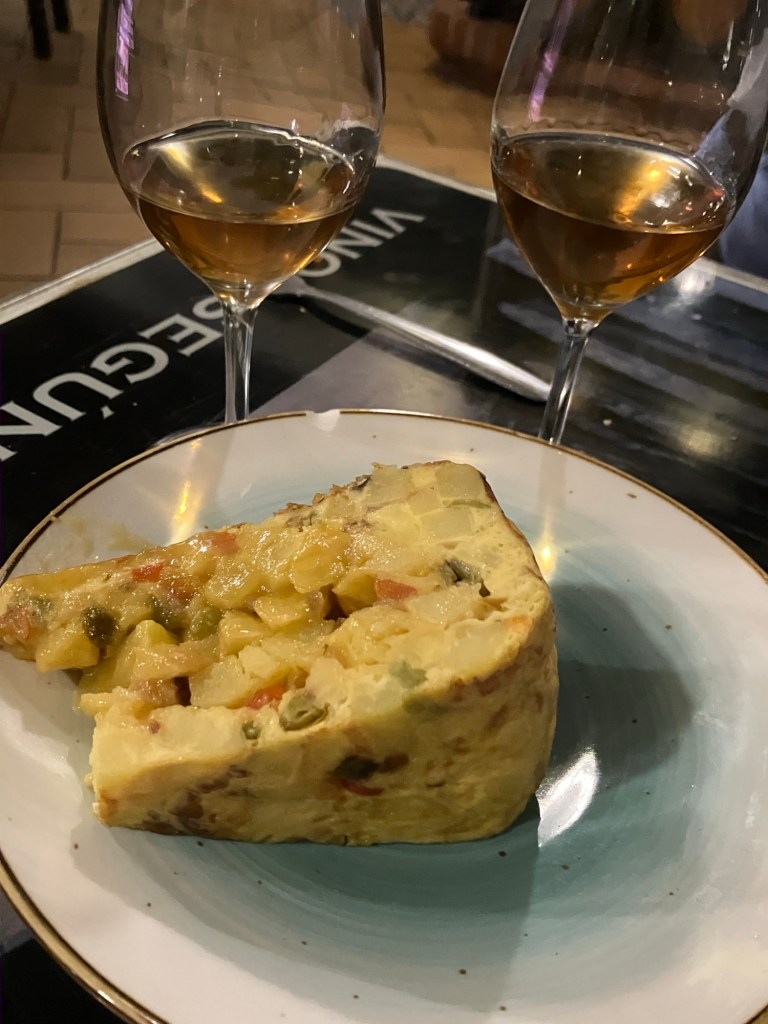
About nine o’clock, the best tortilla in the world makes its appearance. Keep a beady eye on that bar.
Quietly convivial, raucous and fun sometimes, to find a table or a place at the bar, sip great wine and eat what’s local and fresh and time seems to melt. If hospitality is meant to come from deep pride in a job well done and satisfaction at seeing customers feel like friends, then this bar is worth your time. Spend some time and watch the happy ebb and flow. A great, great bar.
When it comes to El Marco it takes a while to unravel some of the complications of vineyard, method, product and just who’s really making the best wine. Thanks to The Spanish Acquisition from Melbourne introducing me to the irresistible force of Willy Perez and the undertheflor blog helping me recognise a Cota 45 bottle when it came up at auction, I’ve come to realise Willy Perez and Ramiro Ibañez are just about as good as it gets. Coming so far, I spent a fair amount of time trying to find a way to visit both the partners in the de la Riva collaboration. The only possible visit to Luis Perez for the punter seems to be the disappointing tourist option. Nice enough but the only Palomino you get to taste is the entry level El Muelle, the rest was their red wines which is fair enough as they did much to establish their iconoclastic presence in El Marco. Things have changed and maybe they should highlight the more recent brilliance in Palominos a bit more? The cellar tour frustratingly passed what’s probably an increasing number of old botas containing all those wonderful single pago Palominos. The reds are good and generous but they’re not what was so close but so far.
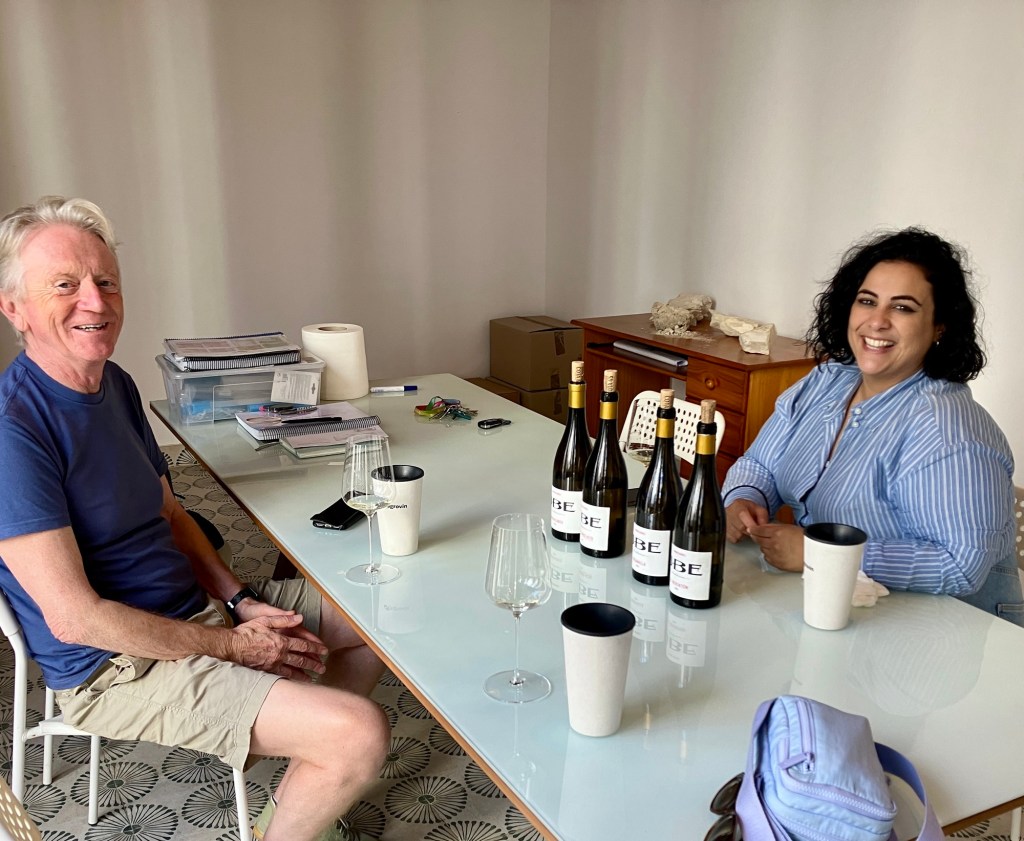
I however did get lucky wrangling a tasting at Bodegas Ramiro Ibañez. The Australian importer was tenacious in getting me in, sadly they went bust shortly afterwards which would have closed the door as Ramiro doesn’t do much in the way of self promotion apart from the infrequent Insta post. Finding the bodega in Sanlúcar involved a bit of head scratching. The sometimes errant emails from the importers didn’t help and got more difficult as they did indeed go of business soon after arranging the visit. What was Cota 45, Ramiro’s old name for his business, started in a small riverside bodega and at first glance is what comes up in searches. But no, there’s a spanking newly renovated bodega in Calle Palma, right up in the old town near Barbadillo. Google maps still shows it as a ruin which is a bit off putting when making sure you’re headed in the right direction. It even needed a tentative WhatsApp message on arrival just to make sure it was the right address. Finally the right place. The new bodega is thoughtfully renovated, no corporate bling but a tasteful reuse of the old with a bit of thought in the layout, beautifully maintained ancient botas and clean new gear. Travel being what it is these days, Ramiro was in Thailand. Nonetheless his right hand enologist in winemaking and a seriously clever thinker, Estefania made our visit one of the best. First a drive out to the great pago of Carrascal and its Las Vegas plot.
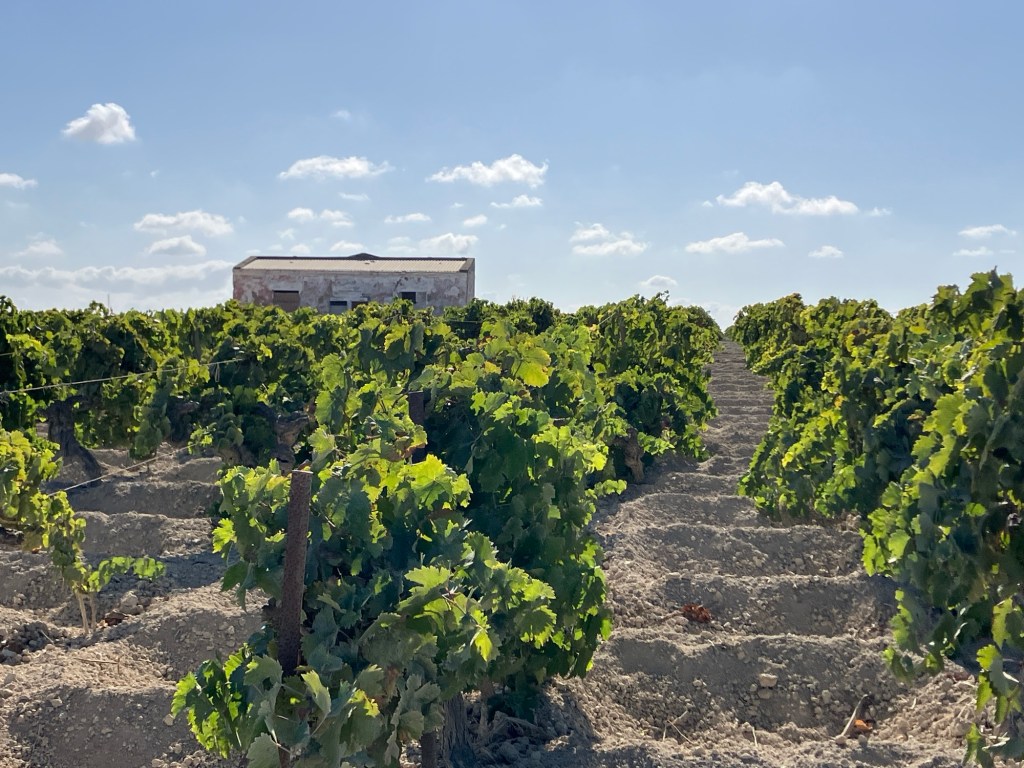
Old vines in great health, still green weeks after harvest. The Albariza here is Lentejuelas which is one of the more open structured and soaks up moisture. The ridges are built by horse and plough in autumn to help catch the Atlantic winter rains,
Old vines pruned in the old vara y pulgar way. Basically cane pruned with respect to the way the sap flows. Makes the most of the productive buds towards the end of the cane and mechanically minimises cutting and the chance of disease getting into the vine wood.
It’s a compelling site, three old clones of Palomino and a sea breezy view of the estuary and the pago of Miraflores. Estefania’s love and understanding of the place made it extra good. Such a wild place at the very liminal edge of Europe and the Atlantic, growing grapes like nowhere else. There’s a definite change in flavour ripeness from the vines close to the sea to those only a few kms away closer to Jerez. Linear and bright to round and savoury, perhaps but not really that simple.
Back to the bodega to taste. Four current releases from four pagos. No Carrascal this time and I forgot to ask if there’s a 2024. The Miraflores, both the blend and the Alta looked fresh, linear and saline in the best way. Paganilla from further inland on Barajuela and Tosca Cerrada Albarizas was wider, more petro chemical, in a good way and apples. Finally El Reventón is from a pago nearest the river on Tosca Cerrado, the tough one. Deep and round. Loads of estuary smells, what the locals call bajamar, low tide stinky. Apples, baked and nuts too. The richest and widest. If you want to see the real contrast in vineyard, Miraflores Alta and El Reventón are close in geography but so different in soil and flavour. Such good wine and all around 11 to 11.5% in alcohol but ripe and rich. All made the same, simple way. Picked, whole bunch pressed, pretty much free run only, fermented in old 500 litre botas and left under flor for just a few months. The results, stunning, elegant to use an overused word but appropriate here, precise and clean.
Those precious old botas.
The microcosmic world of the velo de flor. Higher fill levels here than normal Fino or Mazanilla. Ramiro and Estefania maintain the fruit from Sanlúcar contain distinct compounds to Jerez and feed the flor in a different way, different flavours. Finally a taste from tank and bota of the new season sweeties. A PX from Sanlúcar and a Moscatel. Again transparent and no cloying.
Very happy and now more informed taster. Able to go on a length about El Marco well beyond the bored to sobs stage.
Viva El Marco and its warm, generous people. There’s a forthcoming post concerning the best bar in the world.
I coughed up and downloaded Tim Atkin’s MW good value report on Jerez 2025 and noticed a separate section on Vino de Pasto, the revolucíon continues, olé. Top of the list on a mere 99 puntos was this bottle. Never ever had a 99 wine before and the itch to find and try needed a scratch, particularly as a few days in Cádiz were looming. Similar single plot Macharnudo wines from this partnership between Willy Perez and Ramiro Ibañez have been listed in Australia for a mere $A250. What turned out to be an extraordinary wine shop in Cádiz had this for €70, so I did a click and hopeful collect before the extravagant mood faded. Reading a bit of background, it seems these de la Riva single plot wines come from some old Domecq vines which have been carefully sought and looked after. All made in pretty much the same way, picked, six hours of drying in the blinding Andalusian sun, asoleo that is, fermented and left under a little flor in bota before bottling. The soil’s the thing here, Albariza in the form of Barajuelas. White chalk laminated under what was the sea to form what looks like a deck of cards. Well, this bottle certainly was ace. These fragrant and detailed wines do need a lot of air and to warm in the glass. There’s perfumes you only find in the greats, blossoms of some sort, jasmine maybe, limes and citrus peels and most of all chalk dust, hay and green olive. Tastes the same with harmonious chords of baked apple and honey without the sugar. Simultaneously rich and fino like but fine and linear. An incredible freshness and sapidity to make your mouth water despite the intensity. A finish to make you sit back and ponder. The sort of grape quality found only in great vines.
14% alcohol. Cork and a heavy bottle, there has to be something to criticise. €70.
I don’t think any of the small output from Juan Piñero is imported into Australia. Reading the sherry nerd blogs like the excellent Sherry Notes and the lapsed undertheflor, there’s obviously some love for the wines. I did try a couple by the glass at the classy La Carbona Restaurant in Jerez a while ago and have memories of quite graceful but developed wine. The producer’s website is not one of the wine world’s most commercially minded but there is an email contact, so I sent a hopeful message asking about visiting. About ten days later, an email arrived with cost and bank transfer details, no easy credit card payment here. It all worked and me and a couple of Sherry aficionados turned up on warm autumn day in sea breezy Salúcar de Barrameda. The main output is Manzanilla Maruja, an old brand bought in the early 2000s by Juan Piñero, a local construction baron. The bodega building itself helped a love of the hometown drink as it was bought to develop apartments but was too lovely to demolish. Sadly he died in 2021 from Covid. Such was his passion and love for Sherry, he employed the great Ramiro Ibañez as consultant and bought fruit to fill the botas from the Callejuela brothers’ pago of Hornillo. These choices are certainly reflected in the quality in the glass.
One of the Maruja soleras. Quite a few around El Marco seem to be three botas high. This Manzanilla gets to pass through four which may help explain the extra development.
The visit was both really fascinating and a bit lost in translation too, as the young and energetic capataz, Robert, was technically on top of his game but his English stumbled and my lack of Español made it worse. Thank the great god iPhone for google translate. It was obvious he had great respect for the influence of Ramiro Ibañez.
To the bottle itself. All the salty, savoury and stripped back confrontation of a Manzanilla on its way to Amontillado. But there’s gentle orange peel, nuts, hay and a bit of the old chamomile. Reading Sherry Notes’ review from a while ago, I can’t help but find myself paraphrasing their much better note than mine. There is indeed a lovely glycerol roundness to cushion the savoury tang and even a touch of floral honey. Not a big mouthful but poised, linear and gently fading towards its end. While I must say I get most pleasure from the fruit forward, clean recent bottles of Manzanilla, Fino and especially the Vinos de Pasto, these old treasures are certainly sipped with some wonder. This one could be up to twenty years in learning to be a Pasada and maybe we’re now drinking things as they were nearly two hundred years ago. Treasures not lost.
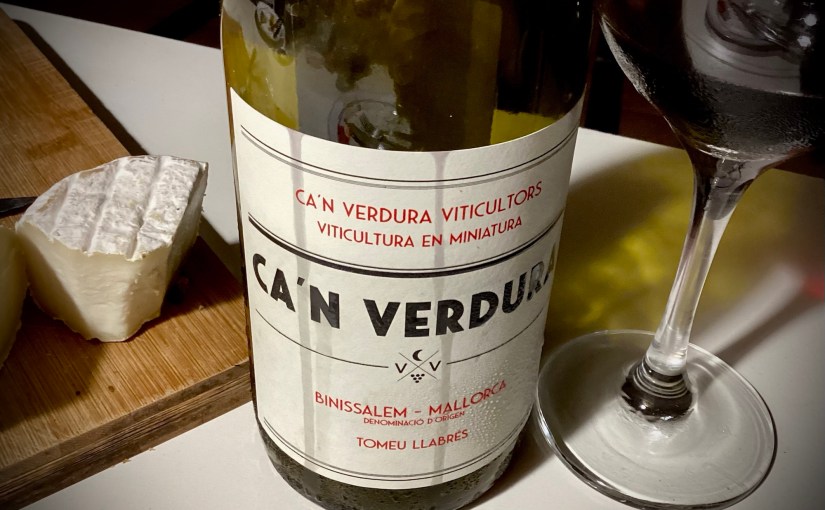
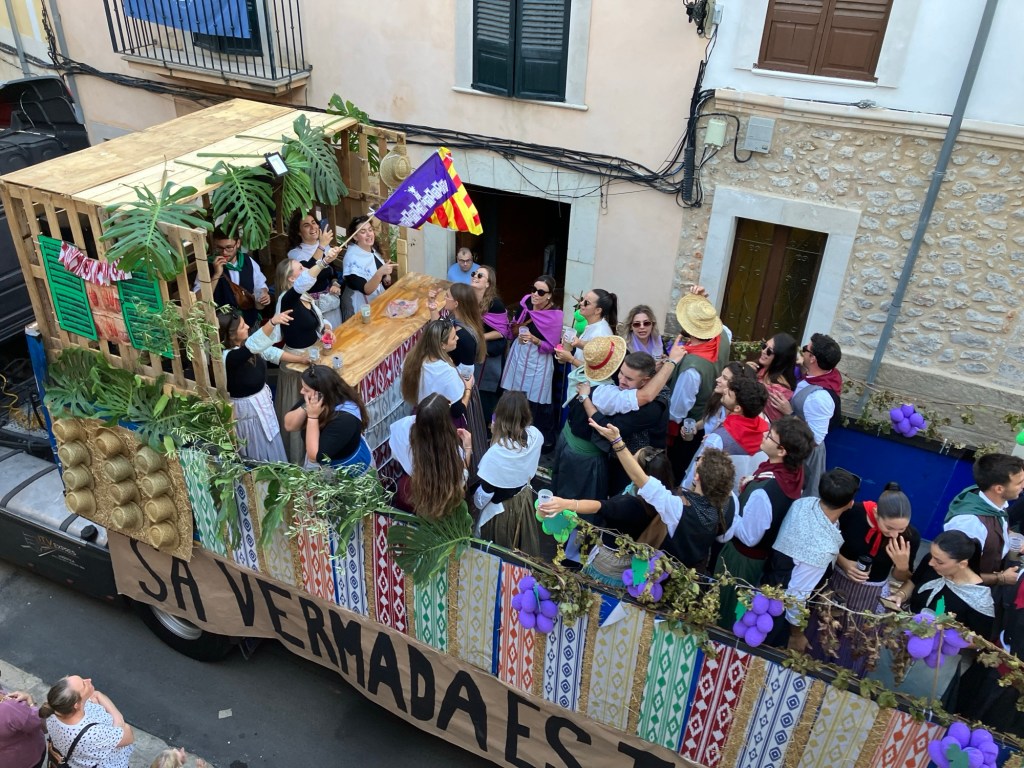
A few days in the lovely village of Binissalem on the train line that tracks the middle of Mallorca to the affluent capital of Palma. The locals there seem to enjoy their lovely seaside city save for the three or four big cruise ships that spew their zombie crowds to clog the narrow streets mid morning. Back in rural Binissalem, Ca’n Vedura seems to be the producer that’s most caught the eyes of the critics in the small DO of Binissalem. This bottle was really tasty and interesting for sure. Definitely lucky timing to arrive in Binissalem as the three week vintage festival was winding up with a beautifully unselfconscious street parade of dressed up locals. And to make a wine nut happy, there was a great chance to taste lots of local bottles at the closing wine festival complete with delicious tapas.
Dressing up, drinking and dancing, sense of community at its best.
This particular wine is made from the indigenous Manto Negro. From tasting a few at the festival, it seems to prone to oxidation, low in acidity and smells a bit like a dry version of port or Garnacha from Banyuls. The colour looks a little on the brown end of red. Well, not this one. Bright crimson with a tinge of purple and showing no hint of portiness. Tastes crunchy with fresh red fruit and a sweet herby edge. Sort of Beaujolais like, struggling for comparisons. Really bright acidity and just a brush of fine grained skin tannin, the acidity almost white wine fresh. Perhaps therein lies the trick. Tastes low in ph which could be due to some greenish white brew added in the making or a bit of early picked stuff or something else like Callet added to brighten it up or just from a cold fresh vineyard? Dunno but it’s fun to puzzle. Pretty tasty whatever goes on and probably not the hard clunk of too much added tartaric. Good to taste things beyond the usual horizon.
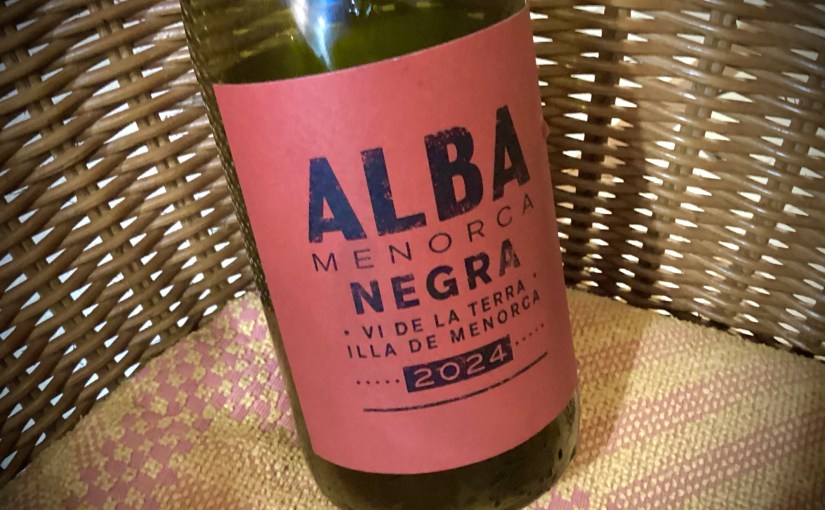
A glass of this producer’s rosado with a plate of calamari overlooking one of those small inlets that crinkle the coast of Menorca was surprisingly delicious for such a thing. And I can hardly remember the last time I bought pink wine, you have to admit it’s neither red nor white to its disadvantage. It was so good a pink, I thought I’d splash some travel euros on a bottle of their red. A bit preoccupied by cooking, I failed to google the bottle and just plunged into a glass, assuming it was one of those Balearic grapes like Callet. First impressions were good, clean, fresh and just ripe enough to be fruit sweet with an edge of tartness. Over a couple of evenings, the fresh red fruit drove on through but with a bass thud of something earthy, hinting at something like caramelised game meat. Really eyebrow lifting was the solid wave of grape skin tannin, ripe and sparkled by natural acidity. Intrigued, I googled and discovered it’s Monastrell or Mataro or Mourvèdre, as was the rosado. Fruit weight, medium body and the transparent depth of a good Beaujolais cru but well dressed grunt aplenty. Well made in a restrained natty style. Hits the pleasure receptors and thought provoking too. Light on its feet for Mourvèdre and none of that distracting farmyard character some identify in the variety. Worth the urge to take a risk on a chance encounter.








 Cognitive Bottle Therapy