
When it comes to El Marco it takes a while to unravel some of the complications of vineyard, method, product and just who’s really making the best wine. Thanks to The Spanish Acquisition from Melbourne introducing me to the irresistible force of Willy Perez and the undertheflor blog helping me recognise a Cota 45 bottle when it came up at auction, I’ve come to realise Willy Perez and Ramiro Ibañez are just about as good as it gets. Coming so far, I spent a fair amount of time trying to find a way to visit both the partners in the de la Riva collaboration. The only possible visit to Luis Perez for the punter seems to be the disappointing tourist option. Nice enough but the only Palomino you get to taste is the entry level El Muelle, the rest was their red wines which is fair enough as they did much to establish their iconoclastic presence in El Marco. Things have changed and maybe they should highlight the more recent brilliance in Palominos a bit more? The cellar tour frustratingly passed what’s probably an increasing number of old botas containing all those wonderful single pago Palominos. The reds are good and generous but they’re not what was so close but so far.
I however did get lucky wrangling a tasting at Bodegas Ramiro Ibañez. The Australian importer was tenacious in getting me in, sadly they went bust shortly afterwards which would have closed the door as Ramiro doesn’t do much in the way of self promotion apart from the infrequent Insta post. Finding the bodega in Sanlúcar involved a bit of head scratching. The sometimes errant emails from the importers didn’t help and got more difficult as they did indeed go of business soon after arranging the visit. What was Cota 45, Ramiro’s old name for his business, started in a small riverside bodega and at first glance is what comes up in searches. But no, there’s a spanking newly renovated bodega in Calle Palma, right up in the old town near Barbadillo. Google maps still shows it as a ruin which is a bit off putting when making sure you’re headed in the right direction. It even needed a tentative WhatsApp message on arrival just to make sure it was the right address. Finally the right place. The new bodega is thoughtfully renovated, no corporate bling but a tasteful reuse of the old with a bit of thought in the layout, beautifully maintained ancient botas and clean new gear. Travel being what it is these days, Ramiro was in Thailand. Nonetheless his right hand enologist in winemaking and a seriously clever thinker, Estefania made our visit one of the best. First a drive out to the great pago of Carrascal and its Las Vegas plot.
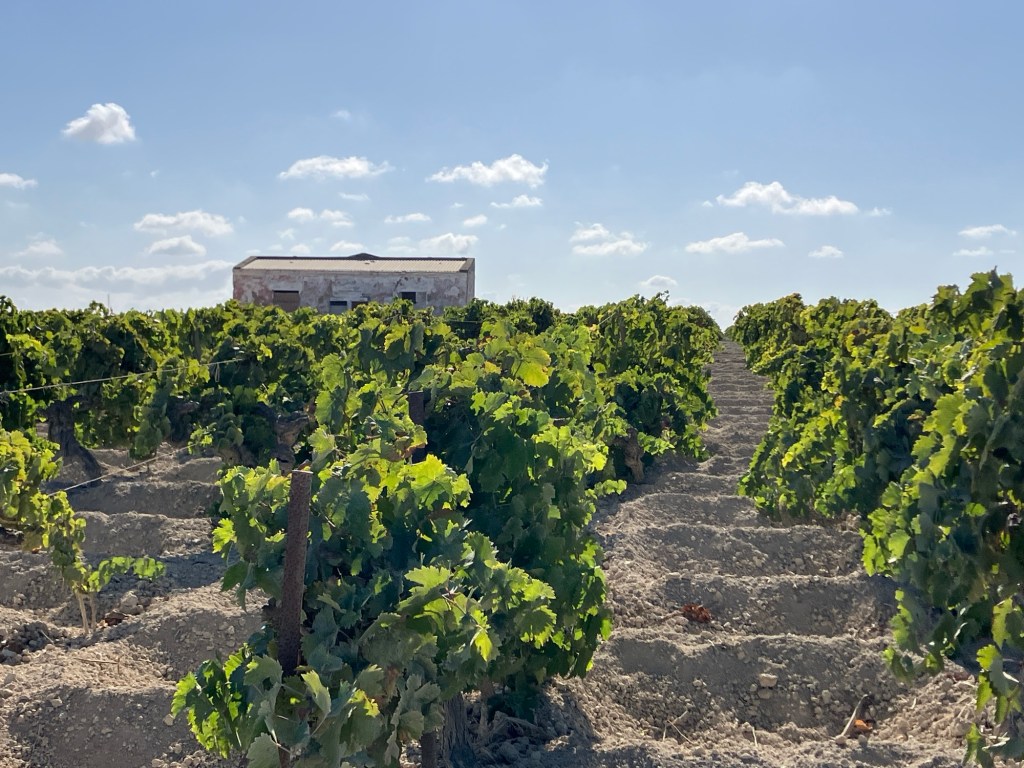
Old vines in great health, still green weeks after harvest. The Albariza here is Lentejuelas which is one of the more open structured and soaks up moisture. The ridges are built by horse and plough in autumn to help catch the Atlantic winter rains,

Old vines pruned in the old vara y pulgar way. Basically cane pruned with respect to the way the sap flows. Makes the most of the productive buds towards the end of the cane and mechanically minimises cutting and the chance of disease getting into the vine wood.
It’s a compelling site, three old clones of Palomino and a sea breezy view of the estuary and the pago of Miraflores. Estefania’s love and understanding of the place made it extra good. Such a wild place at the very liminal edge of Europe and the Atlantic, growing grapes like nowhere else. There’s a definite change in flavour ripeness from the vines close to the sea to those only a few kms away closer to Jerez. Linear and bright to round and savoury, perhaps but not really that simple.
Back to the bodega to taste. Four current releases from four pagos. No Carrascal this time and I forgot to ask if there’s a 2024. The Miraflores, both the blend and the Alta looked fresh, linear and saline in the best way. Paganilla from further inland on Barajuela and Tosca Cerrada Albarizas was wider, more petro chemical, in a good way and apples. Finally El Reventón is from a pago nearest the river on Tosca Cerrado, the tough one. Deep and round. Loads of estuary smells, what the locals call bajamar, low tide stinky. Apples, baked and nuts too. The richest and widest. If you want to see the real contrast in vineyard, Miraflores Alta and El Reventón are close in geography but so different in soil and flavour. Such good wine and all around 11 to 11.5% in alcohol but ripe and rich. All made the same, simple way. Picked, whole bunch pressed, pretty much free run only, fermented in old 500 litre botas and left under flor for just a few months. The results, stunning, elegant to use an overused word but appropriate here, precise and clean.

Those precious old botas.

The microcosmic world of the velo de flor. Higher fill levels here than normal Fino or Mazanilla. Ramiro and Estefania maintain the fruit from Sanlúcar contain distinct compounds to Jerez and feed the flor in a different way, different flavours. Finally a taste from tank and bota of the new season sweeties. A PX from Sanlúcar and a Moscatel. Again transparent and no cloying.
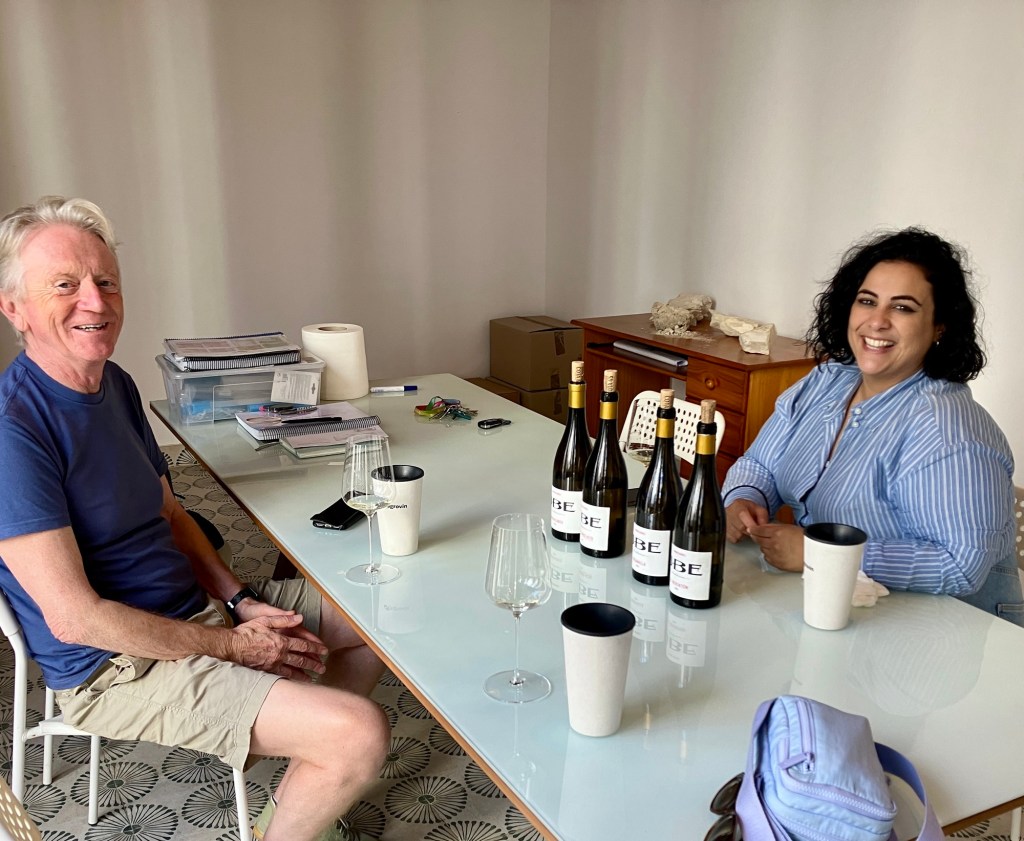
Very happy and now more informed taster. Able to go on a length about El Marco well beyond the bored to sobs stage.
Viva El Marco and its warm, generous people. There’s a forthcoming post concerning the best bar in the world.

 Cognitive Bottle Therapy