A bottle of Sainsbury’s Rioja in late seventies England sparked an enthusiasm which turned into an obsession. Moving to Australia only made it worse. At least I know I’m not alone.
Author: cognitivebottletherapy
Everyday events struggle to share space with wine thoughts in an ever shrinking brain.
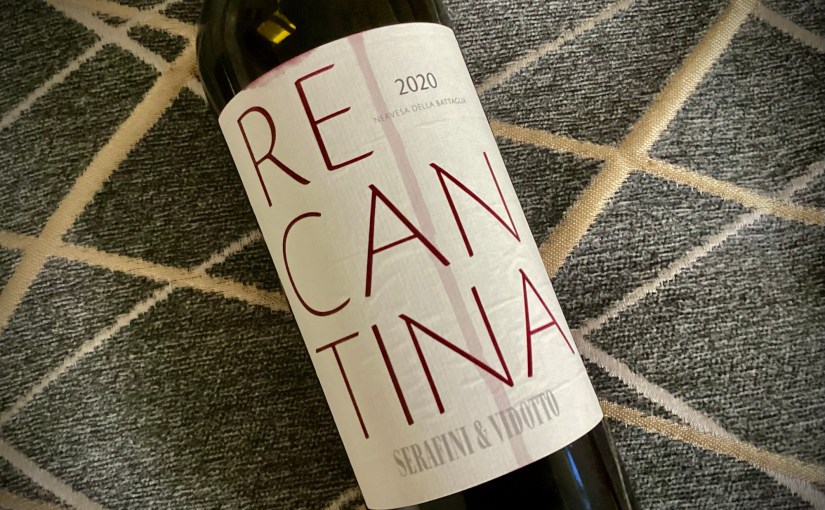
Ah Asolo, a favourite and very beautiful village in the Veneto near Treviso which was so loved by Robert Browning and Elizabeth Barrett that they turned the name into a verb. Hanging around the pretty village was Asoloing. S and V have made some of my favourite Italian Cabernets too. Their home is in the town of Nervesa della Battaglia, maybe apprehensive about the fight, probably not. Finding three different labels of theirs in the impressive Trieste Eataly mega store caused some dithering. Mrs CBT sagely suggested the one with the nicest graphics. With no indication of the grapes on the label or so I thought, it was sort of disappointing to find this wasn’t Cabernet but a super rare Veneto oldie, Recantina, der. The result was no disappointment, incredibly intense wafts of spice and sap like diving nose first into a freshly scythed herb bed. Loads of sweet fruit extract too filling the senses with red fruits galore. The texture of ripe dense sweet tannin mingled beautifully with mouthwatering acidity that lightened and matched the fruit loading. Another previously unacquainted Italian and love at first sight.
The train from Munich to the Veneto passes through the beautiful Alto Adige or Südtirol as Italy’s language complications would have it. There’s a lot of vineyards around Bolzano and the misty mountains, maybe the train passed by the source of this bright spark to the appetite. Lagrein seems to make wine with healthy rich extract without being weighed down by alcohol or tannin. Tart and mouth watering. Sour cherry, dry kirsch and mountain crisp to finish but still a generosity of fruit. A good bite of just ripe skin tannin. There seems to be some really well organised cooperatives up in the Alto Adige. Good to see growers banding together to make something more than the sum of its parts. Together we’re better, even it involves some spirited discussion, it’s Italy after all.
Wine prices in Italy are often half of those imported in Australia, thanks WET. Travelling for a few weeks does make some sort of budget necessary despite the extreme temptation of great bottles for less. Happily there are some good things under €10 a bottle to try. Both these bottles made by Azienda Agricola Lorenzon were under €8 from a local Trieste supermarket not far from the DOC of Isonzo itself. The Friulano has the typically restrained fruit of Italian whites but shows a rich savoury quality of dried herb, subtle yellow fruit and a twist of amaro, very Italiano, almond and soft but lingering acidity. Gets the appetite whetted indeed. The Cabernet Franc like other Friuli versions takes the wine memory to the Loire. This time the sort of lighter weight, fresh and crunchy version. Sparkle of red raspberry, cherry and leaf. A gustatory, nice word, twang of refreshing acidity brushed with a little gentle tannin. Really not the most concentrated fruit as it got a bit washed out by day three but delicious on day one. Neither white or red wine making showing more ambition than the fruit quality but just so and still sensitive to the need of a good mouthful to help all that incredible Italian food go down.
Both 12.5% alcohol. Both Diam, so far ten bottles and only one natural cork. €7.80 both.
Spell check turned Dorigo into Dorito, maybe not a recommended food match. I wondered if this producer is related to one of the best Australian left backs who unfortunately played for both Chelsea and England. Secular things aside, it’s interesting that Cab Franc and Merlot are not recent international arrivals in Friuli. Very unsubstantiated sources suggest they either arrived pre phylloxera with pilgrims wandering back from France or were established by Napoleon which may be at odds with his supposed love of Burgundies. Nonetheless the two most offered reds around here in Trieste seem to be these Bordelaise upstarts, with Refosco and Schioppettino making the odd appearance. So, a random Franc from the supermarket shelf and a good result. Easily fooled into thinking this a good Loire version with just so Franc flavours of dark raspberry and sweet leafiness. Good sinewy tannins are carried by ripe acidity. Just medium bodied and not trying too hard. Good value from the shelves of Trieste’s Coop supermarket. Their deli section is impressive too.
A long time favourite of Italian white wine, Livio Felluga’s bottles have always seemed beautifully made, just the right amount of extraction, just rich enough, clean through the middle and a satisfying minerally end. Finding yourself in the so elegant town of Trieste close to the source, this seems a good way to benchmark other adventures into the local white supply. There’s a lot of interesting indigenous varieties and some uncompromising skin soaking ways. This is no disappointment, opens clean and fresh with a slightly green, nettle thing. Then there’s pear, citrus and a fresh almond swell leading to a neat mouth watering ending. Maybe you can judge a producer by how good is their cheapest bottle? This looks like your money won’t be wasted on a special bottle.
Probably one of the best buys from Dan’s direct imports and surprisingly the stock turns over fast enough to put splendidly fresh bottles like this on the shelves. L23 equals bottled this year. Yes, Barbadillo are one of the biggest producers in the Sherry triangle but they’re extraordinarily good too. If you’re lucky enough to find yourself in downtown Sanlucar de Barrameda, a pilgrimage to the Taberna der Guerrita is obligatory. The list is chosen by a son of the business who also works as major influence in the wine making at Barbadillo. Another of those talented young people rescuing Sherry from its past. The Taberna has a great shop attached where the only non Marco de Jerez white was a Jura Vin Jaune, bit of a flor theme? If you want to see how good modern Fino can be, try this. Classic but clean smells of flor, estuary breezes, savoury olive brine and dried chamomile. Gentle but strong in the mouth, starting with chiselled flor, middling and ending with bruised apple and yellow peaches, floating on great acidity. All the good clean bits of good Fino. A bargain.
For us those of us into good local food and wine that tastes like it suits the place, Spain is a good value adventure. Though there is some distance to travel across dry, high planes, it’s a joy to watch it pass by from a comfortable train seat and a picnic for lunch. If you’re headed to Spain, some of what follows may help, I hope so.
Tarragona.
A comfortable hour long bus from El Prat Barcelona airport to a lovely old town perched above the Mediterranean. There’s a pretty beach ten minutes away, La Arrabasada, roll those rs.
Best restaurants – El Llagut in the old town and El Posit down in El Serrallo, the old port area. Both serving good pans of rice and sea creatures. Wine prices were as reasonably Spanish as you like.
Best wine shop – Perhaps one of the best I stumbled into the whole trip, VinoVi is in a modern square just off the seaside end of La Rambla. A much less fraught promenade than the one in Barcelona. Owned by a lovely couple of worldly wise fluent English speakers. They really know Priorat and its surrounding DOPs and have great contacts thereabouts.
Best wine trip without a car – Take the train from Tarragona to Marça Falset. From there a taxi to Gratallops, downtown Priorat. If you stay at Hotel Cal Llop, there’s not much choice, they will organise the taxi. Great breakfast too. If you have trade contacts or a good retail relationship for an introduction, then a visit to Clos Mogador is one of the best ever. Great Priorat from one of the originals. Celler Cecilio in town offered a warm welcome and balanced, not too showy and delicious wine. Wandering the winding back lanes, the retired Viking who runs Sao del Coster offered an unexpected and thoughtful taste of his carefully made Priorat. Wouldn’t accept the usual tasting fee, due to my enthusiasm, or as he suggested we didn’t eat enough of the really good cheese he offered. Sadly I didn’t manage a visit as vintage was in full flood, but Meritxell Pallejà would make a good stop too. There’s always Álvaro Palacios just across the valley if you’re there outside vintage and have influence in the industry. I do worry about the effects of a warming planet on Priorat. Visiting in September 2023, it seemed it hadn’t rained properly in two years. The river Siurana had completely dried up. The vineyards all dust and brown cover crops that crumbled to dust in my hand. What effect will this have on the naturally bright freshness of Priorat? The photo at least shows just how resilient those old Carignan vines are.
Best food shopping – Crusteau and Forn Andreu for bread. Casa Amatller, a quality small supermarket, and the Mercat Central pictured below for everything else.
Valencia
An easy train ride along the coast from Tarragona to a major food city and a lot less tourists than Barcelona. El Cabanyal is a fascinating beachside suburb, saved from demolition with old streets of nineteenth century tiled facades. Still feels local with a smattering of digital nomads ensuring good coffee. The old city centre is a few kms away linked by a good tram service. If you stay in the old town, try to find somewhere near the Torres del Serrans. It’s nearer the tram stops to the beach. The tram’s a lot quicker than the bus.
Best restaurants – Ca Pepico in Roca Cúiper, a short train trip from Valencia. One of the best run places ever. Exemplary rice dishes, even better than the one we tried in El Palmar near the Albufera marshes where they grow the stuff. An incredible wine list, even extending to Ghislaine Barthod, star of Chambolle. Relaxed conviviality Ca Pepico style captured below.
A special mention for Ca Xoret in Roca, just north of the train station. We only stopped for a late morning snack, it is Spain, but the warm hospitality when they were trying to set up for lunch was lovely. The wine list looked a buff’s joy too. What is it with this village? Back in El Cabanyal, Bodega Montaña is an institution. A characterful old bar serving good food and wine with modern slant, now run to cope with great popularity. Book.
Also in El Cabayal, more relaxed and great for a copa and lunch is La Batisfera. Taska La Reina is good too. In the old town, it’s nice just to wander and browse menus. Bodega Olivi was a favourite stop for an aperitif and snack but it’s tiny. Go early. Best value lunch was 64 Restaurant in the Quart hostel. Pretty room, friendly and a tasty lunch for €11! Generally the standard of cooking in Valencia is incredibly good. Michelin stars abound with good reason.
Best wine shop – Bodegas Baviera in the old town have a good selection. Like a lot of Spanish wine shops the aircon wasn’t impressive, in fact it was pretty hot in there. Maybe stick to recent vintages. The Mercado Central, a cathedral to food, has a good couple of stalls specifically for wine too. I must admit to not really warming to Valencia’s own local grape Bobal. After a few recommendations, it seems it’s just a bit too big and bossy. Grainy green tannins and rough acidity that even gentle whole berry brewing cannot tame. There is a producer we see in Australia, Celler Roure, making finer things from Garnacha (Tintorera, I think?) and the local Mando. Available all over Valencia and a frequent default. Of the local whites, Merseguera, seemed promising. Richer and rounder version of Verdejo maybe with nice cool acidity and lower alcohol. Some choices by the glass were perhaps a bit dilute.
Best wine visit without a car – didn’t do one but it seems there’s trains to Utiel Requena. Looks like there’s a few producers walking distance from the train station but going that far for Bobal didn’t appeal.
Best food shopping- you really don’t have to go much further than the Mercado Central. Enormous and beautiful. Maybe getting a bit touristy for some locals but still great quality to be found. If you’re a Insta fan, a famous local Michelin star has a counter serving market produce food with a queue. El Cabanyal market is still very local, good value and fresh produce. The precooked caramelised pumpkins are delicious. Good sourdough bread is hard to find. My favourite was Panem Unique, a tiny shopfront near the Mercado Central, pictured below.
That’s it for Catalonia and Valencia which seems to be Catalan in terms of language and food to the casual traveller but maybe not to the Valencians. Adventures in Leon and Salamanca to follow….
More Spaniards in the glass and a Moristel revisit from a new vintage. From up in the Pyrenees foothills near the lovely town of Huesca. One of those obscure grapes that seems to produce seriously drinkable wine. Perhaps richer and riper than the 2019. Crunchy red fruit, something darker and earthier underneath. Medium body, purple in its freshness. Lots of furry skin tannin. Despite leaving the bottle to rest for a few months, it still felt clenched in the middle. To such an extent that the last third of the bottle was at its most delicious after being sloshed around in the car on a winding two hour drive. Lots of less robust wines would have collapsed into oxidation. This just bounced back to be at its best. Another example of Barbadillo, one of Spain’s larger producers, just getting better and better.
12.5% alcohol but seems warmer hearted. Diam? $31 RRP.
From Alfarràs, a village to the north of Lleida, which reminds me of a favourite film of recent years set in the village of Alcarràs, not so far away up on the Catalan plateau. It seems it’s a blend of Garnacha Tinta and Cabernet Sauvignon which may mean it’s outside the rules for the Costers del Segre DOP or the producer doesn’t seek certification? It is certified biodynamic, clean, bottle evolved and delicious. Looks like Garnacha or Garnatxa as the Catalans would probably insist. Lots of bright red fruit, peanuts, a touch of floral spicing and a just mid weight texture of chalky tannin and melting acidity. Would have never thought Cabernet if google hadn’t suggested it’s in there. Great Garnacha country. If you travel north west, there’s the Campo de Borja. South west there’s Priorat and the rest. Alcarràs the film deals with the changes, often economically enforced, in the farming communities around Lleida. Turning an old quarry area into a biodynamic vineyard seems a change for the better.
13.5% alcohol. Diam. $30. A Langtons direct import which means a Dan Murphy import too.
Another wine from Spain that happily revives Covid damaged senses. A perfect Spanish wine geek’s bottle inasmuch as the grape and the place take a bit unpicking. In short Lugar de Valbuxan seems to be an ancient cellar and vineyard where lots of time and money have been invested. The Mencia and bits of other old local varieties like Brancellao, Sousón, Merenzao and Garnacha Tintorera are from around a village maybe called O Bolo? Lexitimo means something like authentic in Gallego. And really, this is the real thing, Mencia that tastes like nothing else, except it always brings to mind the best of the Northern Rhone, but don’t mind me. Flowers, sort of violet, dying fire embers, raspberries and complications of all sorts of red fruits. Lots of that indescribable rocky mineral thing. Exquisitely ripe and poised. Head full of fruit and perfume. Hangs around on the softest cushion of acid caress and perfect skin tannin. Medium of body and fine. This is the mid level village vineyard blend in the maker’s Valdeorras range. How good must the expensive single vineyard versions be? Spain does ballet as well as foot thumping flamenco.