A bottle of Sainsbury’s Rioja in late seventies England sparked an enthusiasm which turned into an obsession. Moving to Australia only made it worse. At least I know I’m not alone.
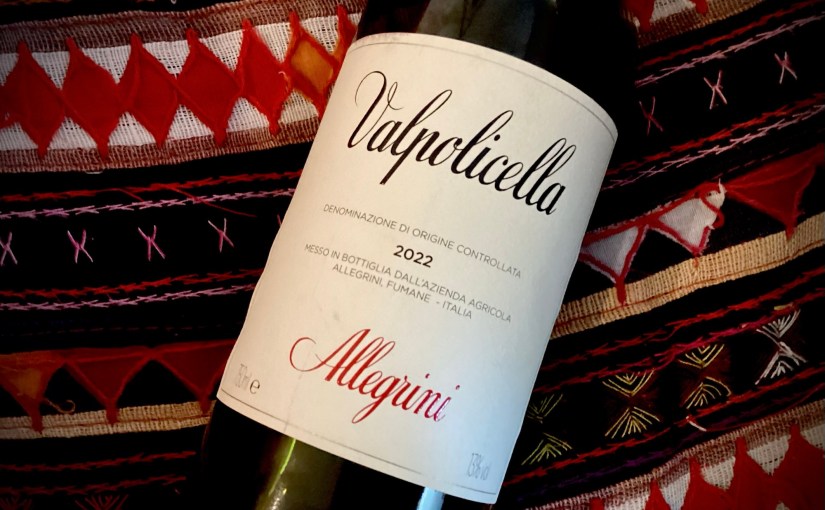
A favourite producer over the last twenty years or so that always seems to make beautifully clean Sangiovese from what are obviously great grapes. No difference here. Pure clean Tuscan Sangiovese full of savoury hedgerow berries, if they have hedgerows in Tuscany? There’s also more Italian cherries, the slightly sour sort and loads of almonds mixed with a handful of walnut. Sweet leather smells too. The structure is impeccable, firm ripe tannin that sweetens with food and the sort of blood orange acidity that points to perfect ripeness. Oak’s an afterthought and spotless. There’s a gentle aristocratic air about lots of Tuscan estates. This one makes wine to match that feeling. Can’t think of a Chianti I’ve enjoyed more.
A possible treat and maybe a risk as it’s from a natural leaning producer and who knows how it’s been looked after before putting up for auction. A blend of 40% Cabernet Sauvignon, 40% Merlot, 15% Cabernet Franc and 5% Colorino, I suppose it’s what we used to call Super Tuscan last century. From vineyards in Panzano’s famed Conca d’Oro I think, sort of Chianti grand cru? There’s some odd idioms in the English language, one of them about a curate’s egg which seems to have come from an old Punch cartoon and has stuck in usage for something that’s good in parts. This is indeed good in some ways and a bit off in others, but puzzlingly enjoyable. The dodgy things first, volatile even beyond my own inability to notice and a whiff of the old plastic smelling band aid. The good, extraordinarily tasty fruit, just ripe and of beautiful mineral crispness. The cool reserve of old style Bordeaux perhaps? Fresh juicy cherries, sweet but a little tart just like the beauties in season in southern Australia at the moment. Red currants and fresh blackcurrant too. No hint of jam or sugary over ripeness. Pleasing drag of dusty, in a good way, drying and very fine tannin, well meshed to fresh acidity that maybe just gets a touch too tangy to end. Somehow makes another sip inevitable to see if it’s too much, perhaps yes, maybe no. Wabi sabi as it’s so well put in Japan.
14% alcohol. Cork. $32 at auction, good hunting I think.
Barely a score in technical terms, 93 if you ignore the warts.
Good wine is so much better when the it’s shared. If not at the table then swapping a few bottles can work well if you’ve scored a multi bottle auction lot and want to spread the fun. The bottle came my happy way in return for something I can’t remember but can only hope was as good. About as tasty as Dolcetto d’Alba gets, this opened clean and fresh but a little reticent. A good swirl and there’s all that thickness of sour dark cherry and kirsch good Dolcetto does well, ripe but no undue sweetness. Perfectly weighted ripe acidity and tannin, full of that Langhe stony character, float all that goodness to the point of refreshment. It’s easy to see why the Piemontese value Dolcetto like this as the thing to brighten their already delicious food. Sure, Nebbiolo can make you ponder its complications but sometimes straightforward pleasure is more fun, particularly when it’s so much of a place. What a swap.
14% alcohol. Diam. Swap.
94 points, particularly if points are for place and focus.
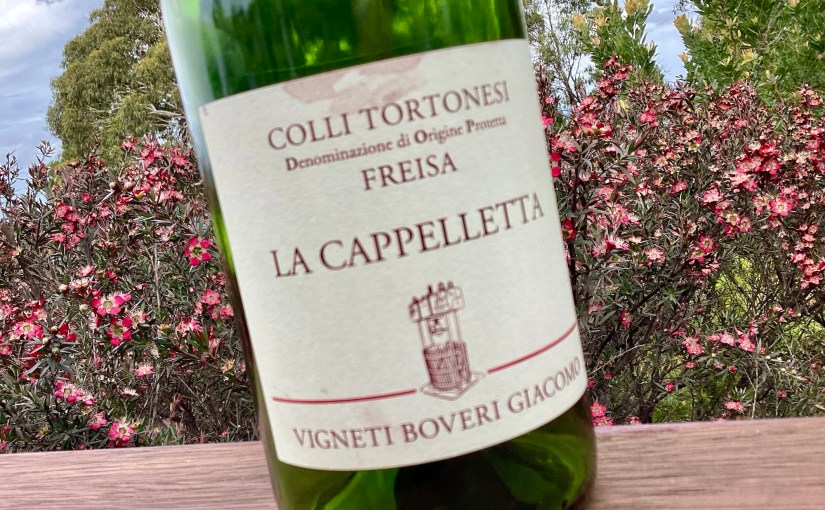
Another label for the train spotter boy in every old man wine lover I reckon. Shame I managed to get the photo out of focus as it’s one thing this wine doesn’t lack. A string of Italian names that probably mean little to most except the venerable Piemonte hound looking for value. This got a great review on The Wine Front, that most entertaining of sites. An essential resource when browsing the auction site. A few years in bottle have done nothing to interfere with the cheerful bite and depth of great grapes here. Loads of just picked dark cherries and that amazing rockiness that comes in layer after layer. Touches of woody herb and black olives. Great measures of brilliant fruit and contrasting geological flavour, assuming it’s possible to taste such things. Not hard to see Freisa’s part in parenting Nebbiolo. Shame it was my only bottle. In Piemontese terms of value these days, a bargain.
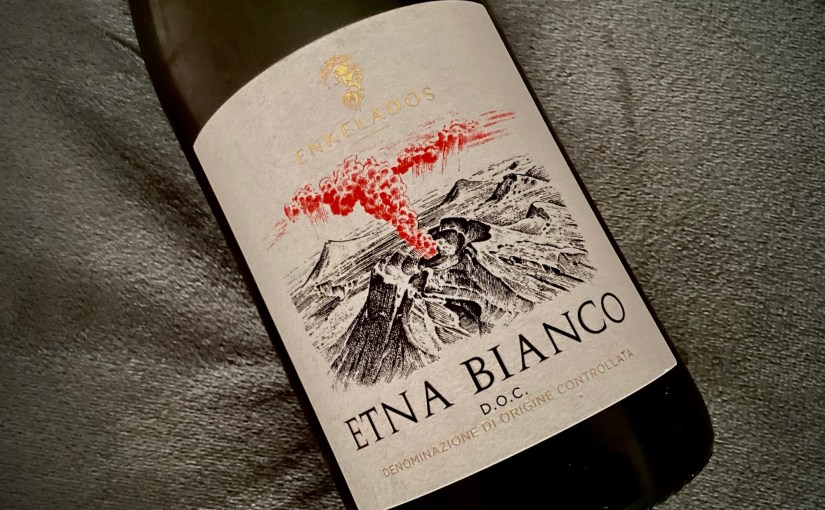
One last Etna Bianco bought in Sicily and not exactly chosen by any great knowledge about the producer but because the label has a picture of a favourite train. At first glance it seems the maker was founded by a wealthy and noble entrepreneur from Vicenza who put his money where his palate told him, a winery just south of Palermo. Their production seems to focus on the usual Sicilian varieties from around the hills south of that chaotic city. I was a bit surprised to read on the back label that this bottle was in fact made for them by Cantine Valenti who were also responsible for the Deco supermarket bottle just posted, at about half the price. Just like the Enkelados bottling, this has the same deeper colour and extraction without adding weight. The same build of flavour and cut of Etna acidity but certainly a notch or two up in the fruit quality. Poised yellow fruits and flowers with a bit of hazel nut and white chocolate. Open over three days, there was again a weird echo of white Burgundy, with a very different texture of course, that fine pumice like acidity that’s got me hooked. A rich version but still balanced and no wobbles. Wasn’t expecting Etna Bianco to be my favourite Sicilian drink but it is now. Fresh pomegranate juice is pretty good morning option though. Enough antioxidants to clean up all that indulgence.
An Etna Bianco from one of those easy to navigate large Italian supermarkets on the edge of town which always seem to have great deli counters and a value wine selection. And another mystery label. This wasn’t exactly a huge risk at €8. It seems hard to find anything less than delicious in terms of Etna Bianco these days, maybe even at this price point? OK, perhaps not the fine flavours and highlights of the best but still rich, clean yellow fruit flavours with a blur of herby green. Nonetheless, there’s still that trademark pull of refreshing pumice like acidity and vapour trail of ash. Wouldn’t it be good to find something like this on the shelves of Dan’s for less than $15. Oh well, in ten days or so I’ll have the chance to find out again. Sicily’s very good for adding padding around the middle. Thanks to the incredible Giacomo Serpotta, this putto and I share the happy discomfort.
13.5% alcohol. Diam. Amazing, in maybe sixty bottles opened in Italy in two months, only three natural corks. €8.
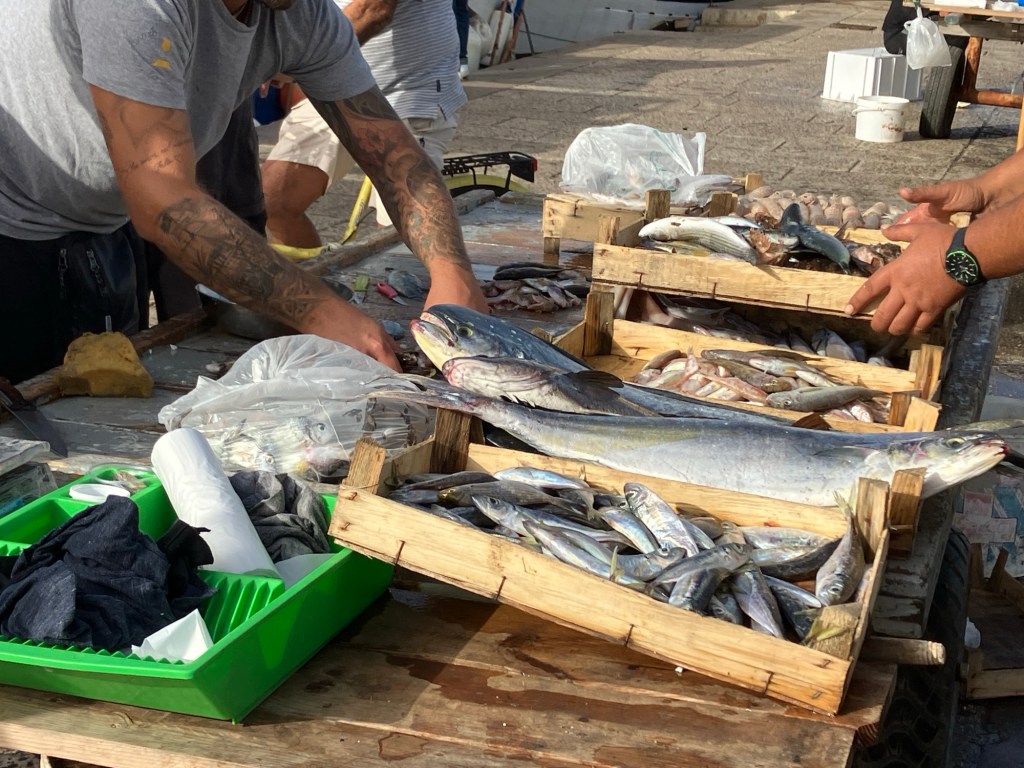
The very tip of Trapani’s promontory, all salty air, islands on the horizon and fishing boats seems a long way from smoking Etna. Just the sort of place for rich and saline whites to help the freshest seafood along. What’s left of it in the Mediterranean anyway. Reading posts from Fishact, a German NGO, it seems industry regulation is not all it could be, particularly when it comes to swordfish size. There are resentments aimed at the EU rules among the struggling small scale fishers, including incredibly it seems a nostalgia for pre war days when shooting scavenging dolphins was encouraged. Sometimes wine and food politics collide to an uncomfortable degree. Maybe small catches from local boats may not be as damaging to stocks as theoretically regulated industrial scale tuna catches? So many conflicting arguments. Maybe we just eat less?
Anyhow, back to wine and one that would happily go with a vegetable pasta. The local supermarket across the street had this label in both Catarratto and Grillo versions and both the sort of well made, nicely ripe and satisfying thing that the less vaunted bits of Sicily do so well. Catarratto seems to have good rich lime, citrus, local cedro perhaps, and sweet green herb flavours. There’s a saline tang and large scale ripe acidity to cut. Brings me back to thoughts of the sea. The Grillo version is more yellow fruits, stone fruit and an estuarine waft that brings good unfortified Palomino to mind. Bit of judicious skin contact brings some depth of flavour in both. There’s that Groove Armada song, “if you’re fond of sand dunes and salty air”. Oh hell, yes. Well done Mustazza, good versions amongst a few that have been too green, too made or a too much residual in sweetness.
Entry level Rosso from Russo who is definitely on the list of must try when so close to the source. There’s a welcoming restaurant on the edge of Passopisciaro called Borgo Spirito Santo which was mercifully close to the village. Luckily only a stiff twenty minute walk uphill which meant a leisurely totter down in the Etna moonlight with a bit of help from the iPhone torch. As usual in Sicily, there was great cooking that doesn’t muck about too much with very local produce. Being locavore isn’t some fad, it’s still just an economical way of life on the island. The wine list was very local too, most bottles don’t seem to have travelled far, this one 1.70kms according to google maps. It looked very at home, bright, fresh and clean. After a by no means extensive sampling, the standard of wine making seems high around Etna these days. Careful but not overblown to hide what makes Etna so interesting. This felt just medium weight, sort of sensible Pinot extraction level. Once more there’s those red fruit cherry like flavours, spice that’s hard to pin down and the sweet earth mixed with white ash thing, as best as I can manage. Drinking and wondering a lot, the thought occurs that much of the pleasure in wine comes from textures as much as flavour. And it’s the pumice and fine mouthwatering acid feel of the Nerellos from Etna that sets them apart. Keen to try more.
14% alcohol. Can’t remember the original closure. €25 ish on the list. Italian wine lists are great value.
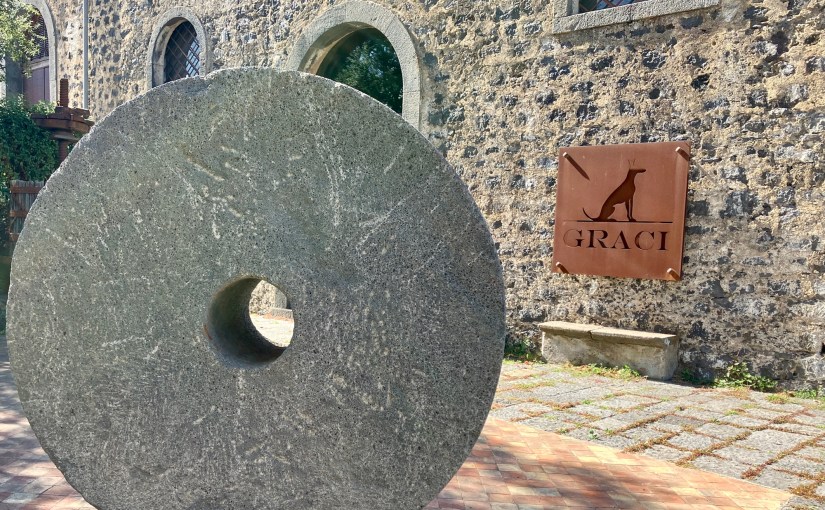
Another passionate and big investment in Etna’s vineyards, Graci are just a few minutes walk from Passopisciaro’s main street where the speed limit seems to be optional and the morning coffee choices are limited. Arriving at the same time as crates of just picked Carricante, those promising smells of a winery in vintage filled the noses of us lucky tasters.
As a nerdy aside, it’s maybe interesting to note a couple of choices when making white wine, starting as soon as grapes arrive. Here Graci choose to destem and crush rather than the whole bunch pressing of I Custodi. I’m pretty sure I can’t tell the difference when the juice is fermented and rested safely in a bottle. Both ways seem more about avoiding the flavour and texture of leaving the juice to suck up skin flavours. Fascinating, no.
All of Graci’s production seems to come from vineyards close to their home, even the whites are local to the north slopes rather than from the east favoured by some. They do have a joint venture with Gaja of Piemontese fame on the south west slope but the tasting concentrated on the home vineyards. Walking along the western edge of Arcuria on the way to taste, the vines looked in the best of health. 2024 is putting a smile on quite a few Etna faces. Speaking of which, the simpatico Riccardo led us through a broad and delicious line up.
The whites were maybe a bit rounder and softer than those from further east but had a purity and focus that showed some impressive definition as the two crus of Arcuria and Muganazzi were quite different in flavour and structure. The former riper, rounder and all yellow fruit, the latter really reduced, more linear with a higher line of ashy acidity. Interesting too how we all see different things in wine. Of seven tasters, I was the only one to prefer Arcuria, finding Muganazzi just a bit too sulphury.
On to the reds, noting that pink is for drinking not going on about, the cleanliness and purity were remarkable. But in no way diminishing the depth or sense of place. The 2021 Arcuria, Mascalese 100%, was hedonistic with rich perfumes of ripe wild strawberry juice, spice and fine white fireplace ash. A bottle would disappear as quickly as some drivers take the bends in the roads around Etna. From a special patch of Arcuria, Sopra il Pozzo, above the well, was well above many Etna Rossi in terms of rounded sweet autumn fruit, smoky with age, and a perfect wash of those volcanic tannins and acidity that leave no gaps. If we were tasting blind, I made the dubious comparison that I would have maybe thought it a mature 1er cru Burg with some austerity. Silly maybe but sometimes comparison is the easy option. Tasting such good things so close to where they grow is a privilege. Grazie, Graci and Riccardo indeed and the friendship that made it possible. Etna blew a smoke ring as a reminder of who’s in charge.
It’s been over thirty years since my first taste of a good wine from Italy, a Chianti I think from the great vintage of 1985. It was when proper Bordeaux became just about unaffordable for the eclectic palates who bought their wine from the much missed Richmond Hill Cellars in Melbourne. Thanks to that great shop, Italy fast became a source of well priced deliciously savoury wine. Those 1985 Tuscans did hit the spot, we could almost afford Sassicaia then. Many visits to the old boot later and still yet to set foot in Sicily. No better time really as Etna has tickled the radar in recent years, sometimes I’m not entirely sure why all the fuss but occasionally the odd bottle has definitely suggested a place like no other. There’s no better way to get there than the slow train from the coast north of Catania to Passopisciaro where the action is, or isn’t as John Coooper Clarke would say. Lots of investment in wine production, not a lot happening on the streets. A car would have made things a lot easier finding food, not to say driving would be a bit unnerving among the local Fangios. Careful google map planning, that never goes wrong does it, meant a nice hike through the vineyards to I Custodi.
It looked a healthy vintage. Happy vines and clean bunches. The winery is obviously a large investment in time and money but happily it looks more practical than architecturally extravagant. It must be close to self sufficient in energy use too and even incorporates an updated version of the old Arabic evaporation cooling system via the chimney on the right. It works well to suck cool air through the cellar below.
Thanks to the simpatico Maurizio, a sommelier of great knowledge and experience in the wine business, we got a great tour of vineyard and winery.
There’s a new plot of Nerello Cappuccio next to the winery. I Custodi are keen on the colour, freshness and structure it can add but not so much perhaps on its fickle nature. The single chestnut stake for each vine is the labour intensive way it’s been traditionally done. A trudge through the older Mascalese vineyard was like walking on a fine black sand and pebble beach of such softness, its black dust got through shoes and socks to leave sweaty feet blackened. Remarkably there’s some centenarian ancient vines which have survived phylloxera, gnarled and beautiful. Enough of the outside, inside to taste.
Ten bottles all in row, what a great sight. It was just about every example of their production. The whites in particular were extremely good. From vineyards on the eastern slopes of the volcano which produce finer Carricante perhaps? Pressed in whole bunches and stainless steel fermented and matured, there’s a purity and freshness but aroma and weight too. The real stars of the tasting were the two Ante and the Imbris. All three had that extra depth of aroma and richness, acacia or wattle as we smell in Australia, flower honey, nuts and white chocolate. Profound. The sort of thing found in great White Burgundy maybe? But cut with a breeze of indelible ashy acidity. The Imbris, I think, comes from a the prized slopes around Milo as it’s allowed superiore. From the rains the name suggests. The reds include about 20% stalks and 20% Cappuccio and a bit of older larger oak finishing. Nicely balanced between upright stainless only versions and the lift and nuttiness of more traditional ways. Except of course the Cappuccio, in purezza, as the Italians say which was deliciously bright, tense and reminded Maurizio of a good Morgon, well said. Maybe you can taste igneous rocks in a glass?
We ambled our way back to the village in warm sun thinking we knew a lot more about Etna. Big thanks to mates in the business in Melbourne for organising a such a treat.