2017 Bodegas La Purisima Estio Blanco

Spain has some of the most convivial bars for a delicious crawl but frustratingly for a wine lover, some have a limited wine selection by the glass. Try finding a fresh copa of Manzanilla outside Andalucia or anything elsewhere apart from the ubiquitous Tempranillo or Verdejo, Spain’s answer to Sauvignon Blanc. Or perhaps it’s my prejudice about grapes beginning with a V? Oops, Macabeo’s name in Rioja is Viura, perhaps we can stick to the former to maintain the unreasonableness? This example of Macabeo is from the hills of Yecla, 150kms inland from the beaches around Alicante where it’s probably drunk by the tanker load. An interesting but recently a less loved variety, here it doesn’t shout too much but shows low key but complex smells of chamomile, green apple, olive, and sort of plasticine. Widens out nicely in the mouth and then tails off, leaving a good pithy grip and firm but fair mineral acidity, tinged with a breath of oxidising sun burnt skins like a warm sea breeze. Could be enjoyed without paying too much attention but enough going on for those seeking a taste of an authentic Mediterranean grape.

12% alcohol. Screwcap, yes. $21.

88 points but a decent bonus for a cleverly made, properly authentic to region drink.
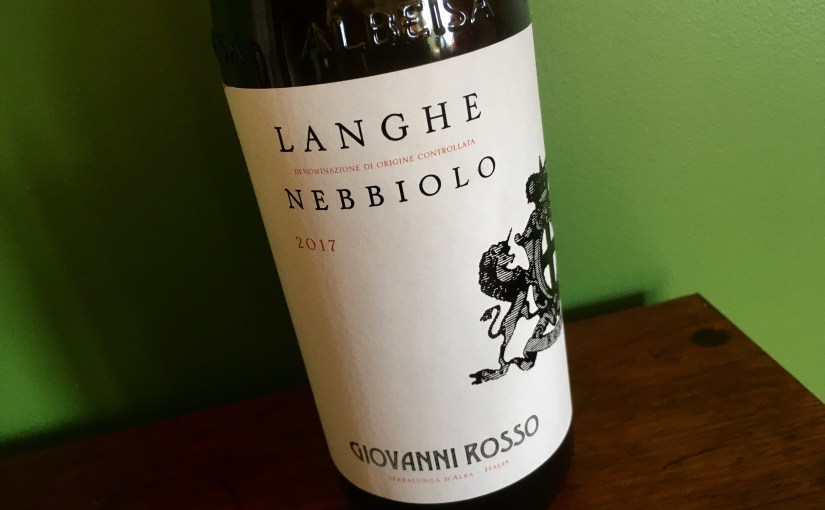
2017 Giovanni Rosso Langhe Nebbiolo

The 2017 vintage reports suggest it was hot and sticky work for a bunch of Nebbiolo grapes in Piemonte. First impressions were of brisk warm fruit and a chunk of firm tannin and acid without some of the perfume and for want of a better words, intricacy of flavour possible around Barolo. Nebbiolo can be contrary and slow to articulate though. So sure enough, by the third and particularly the fourth day of airing some rich cherry fruit and warm rose fragrance unravelled. Perhaps there’s not the sweet earthy complexity but it finally turned out round, satisfyingly ripe, with the tannin meets acidity fun of good Nebbiolo falling into place. Only medium bodied and gently extracted, perhaps showing a light touch in a hot vintage? Just landed from a long sea journey, some imports can look surly and take up to twelve months to open up, maybe the case here? It would be good to revisit in a couple of years.

14% alcohol. Diam, I think, guilty of an incomplete note. $45.

92 points.

2018 Pierre et Rodolfe Gauthier Jour du Soif Bourgueil

Maybe jour du soif is French for an AFD, whatever that may be? This is far too good to just quench a simple thirst. Stainless steel only I think and it’s so clean and pure bar a little reduction in the first small glass. Ripe and dark for a Loire red, there’s bright raspberries, sour cherries, almost plum and a satisfying build up of gravelly earth as it slips away. Just as it does, a waft of that sweet green leafiness pops up to remind us it’s Cabernet of the Franc sort. These fleshy evenly ripe flavours have great support from silky ripe skin tannin and comfortable acidity. It proved its worth by staying much more than just thirst slaking over three days. At last, a Loire red wine not spoiled by a dirty barrel.

Following a bit of a google, it seems the producer is also more widely known a Domaine du Bel Air, Gauthier Père at Fils and have been certified organic since 2000. The back label on my bottle was just Pierre et Rodolfe Gauthier. Their more expensive cuvées are finished in oak, hmmm.

13% alcohol. Cork. Think it was about $36?

92 points.

2017 Domaine Oudin Chablis 1er cru Vaugiraut

A weekend treat for this Chablis lover. Opened a little bit yeasty and wild but soon calmed down as it took a breath of air. Oh yes, this has all those Chablis smells and flavours of ripe citrus, maybe quince, creamy yeast lees, a yoghurt sourness and that ocean spray. Natural and relaxed. The concentration of flavour ramps up as it glides on flinty rails through the mouth, flaunting it’s premier cru caste. The flavours swell and linger, carried along on a cool watery stream of chalk and pebbles. Oddly this may be a real memory of smell and taste. Growing up in Wessex, my early summer holidays were often spent splashing in a gravelly chalk river. So immersed on a rare hot day that I probably swallowed a fair drink. Delicious Chablis will do these days.

13% alcohol. Cork, boo. $60.

94 points.

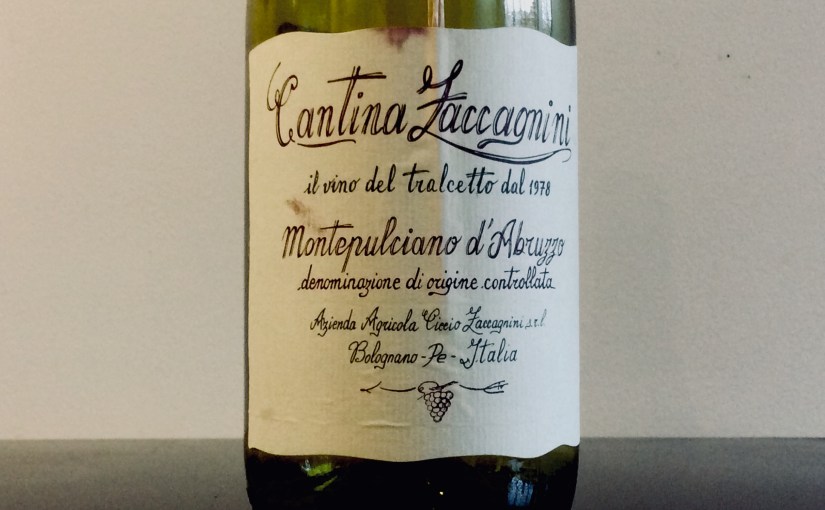
2017 Cantina Zaccagnini Montepulciano d’Abruzzo

If you’re looking for value, lots of flavour for your money and a good place to step into the world of savoury Italian wine suited to the table, then the full Monte is the grape. Nothing to do with the Tuscan town of Montepulciano where they grow Sangiovese under a different name, typically obtuse Italy. Zaccagnini predate the designer labels, sort of obvious really, and they still tie a vine wood twig to the bottle as a badge of authenticity. The contents are still very authentic too. Starts off a bit surly and reduced but air draws it out. Mouth filling tastes of those sour Italian cherries, roadside berries, coffee grounds and sweet tar. Good grainy tannin and enough well meshed acidity to carry those honest, rugged flavours. If you were a fan of Italian football a while ago, you could say this is more Gennaro Gattuso than Rui Costa.

12.5% alcohol it says but feels warmer. Cork and a good old fashioned lightweight bottle with a twig. Around $25.

91 points.

2017 Te Mata Estate Awatea Cabernets Merlot

From memory this is normally about half Cabernet Sauvignon with Merlot and Cabernet Franc making up the other half. If you have a Bordeaux itch, then this will scratch it with a gentle hand and leave you with enough money to buy another or even trade up to a top of the range Coleraine. Spotless perfume of red berries, dried flowers, a touch of tobacco and that old school pencil box. Beautifully judged extraction to just medium bodied, Perhaps not quite the fruit sweetness or depth of the warmer year 2016 release but it does have that pleasing drag of fine dry tannin and acidity that brings to mind those oft repeated words, gravelly and mineral. What exactly mineral means is hard to say when there are so many minerals on planet earth but it will have to do. The reviews of the 2018 Coleraine are so good, there may be extravagant purchase looming notwithstanding the archaic use of tree bark. Hawkes Bay’s own first growth.

13% alcohol. Very smooth, expensive looking bit of cork. Around $40. The Coleraine is still under $100 which in world terms is value.

93 points.

2006 Yering Farm The George Cabernet Sauvignon

Yet another Yarra Valley Cabernet, this one from under the floorboards. Still a crimson sort of red colour, as usual with Cabernet from the Valley, age is kind. Those distinctive smells of ripe blackcurrants cut with leafy green and a twang of truffle and tinned sweet corn. Little bit of blackberry to add richness. The structure has resolved, throwing a good layer of deposit on the side of the bottle. The gentle fine tannin and ripe sweet acidity that make Yarra Cabernet so attractive are there in good proportion. Sometimes a divisive set of flavours for those who find the green savoury notes difficult but for me there’s more than enough sweet fruit pushing the tang to one side. As the Pretenders sang, special, so special.

13% alcohol. Screwcap. About $30 sometime over a decade ago.

93 points.

2018 Domaine Chignard Fleurie Les Moriers

Forthright ripe red fruit bursts from the glass quickly chased by a toffee warmth, then a crunch of firm acidity. A big bowl of strawberry, plum and a few blueberries. Not surprisingly there’s an overlay of floral smells like violets and roses, Fleurie after all. In between the dense fruit and popping up again to finish is a mineral pull, licking rocks again. Bold, warm and positive but detailed and composed too. Just to prove it’s maker’s place amongst the minimalist interveners, a yeasty edge suggests low sulphur. All the parts came together well over two evenings. Definitely not Beaujolais Nouveau.

13% alcohol. Cork. $42.

93, maybe 94 points.

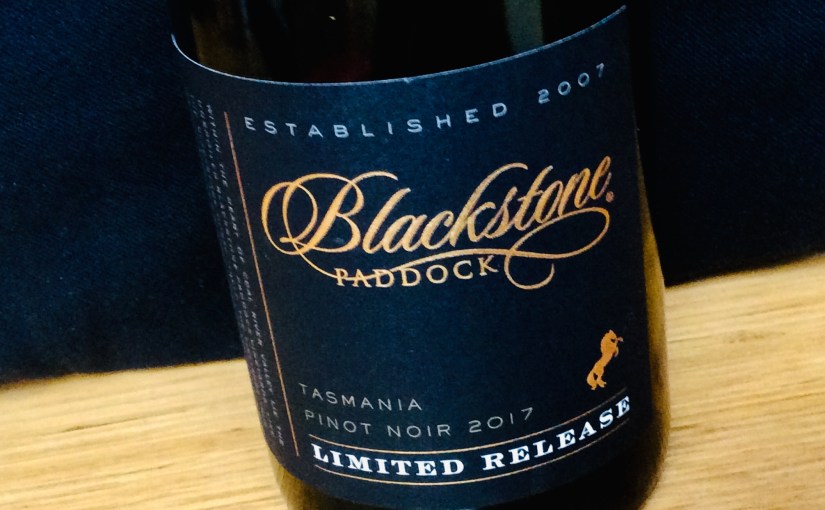
2017 Blackstone Paddock Limited Release Pinot Noir

If you google map Blackstone Paddock, the closest you get is a suburb in Launceston Tasmania called Blackstone Heights. Marketers do love to invent hills, gullies and now paddocks. The back label reveals more, a blend of grapes from Pipers River, sort of near Blackstone Heights, and from Coal River, down south near Hobart. Whatever the source, it’s a convincing effort for well under $20. Smells of Pinot Noir, thus strawberries, cherries, wet green undergrowth, rhubarb and a sprinkle of oak spice. Nicely light to medium weight, not trying too much. The only reservation on day one was a lifted waft of something like feline Sauvignon Blanc, some mint, pine needles and a note of sour green acidity jarring against the warm red fruit. Some over and under ripeness in the blend? Happily, after a day left to compose itself, the blended parts got a lot more comfortable in each others’ company and the acid softened. In fact it carried the flavours to a nice fresh end, tickled by a titchy bit of tannin. Bit cobbled together maybe but it avoids being overwrought, unlike this review.

13.5% alcohol. Screwcap. $15.95 I think from those oddly arranged Aldi shelves.

89 points, sort of 87 first day, 90 second, rounding up the average.

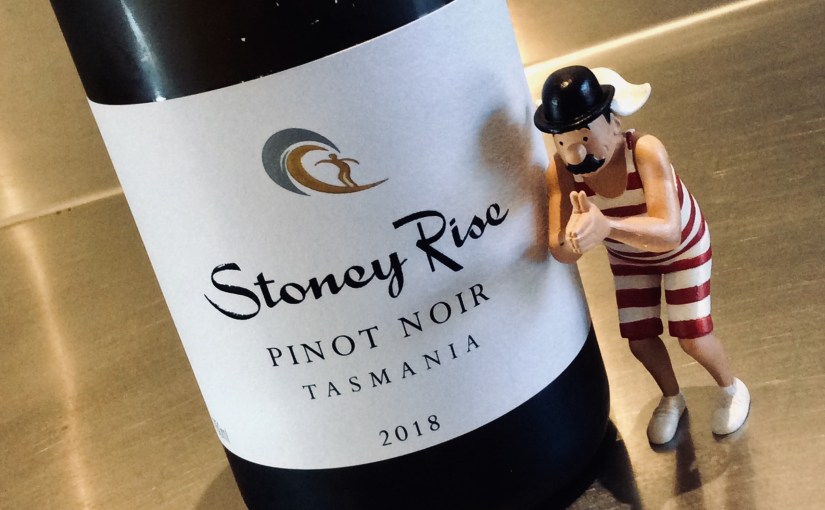
2018 Stoney Rise Pinot Noir

A favourite Tasmanian Pinot producer who seems to get proper flavour ripeness whilst keeping a good freshness. This one does just that with poached strawberries, cherries and a bit of aniseed. A terrific tug of cool acid and fine tannin gives the end a succulence trimmed by that stone like character that seems to be both flavour and texture. It seems to avoid those mint and pine needle flavours of under ripeness and the dark over extraction of the too ambitious. The label provides some good advice about accompanying things, including hare, doo wop, and lovers. Cheers.

12.5% alcohol. Screwcap. $29.

93 points.